The Best Hologram Companies in the World
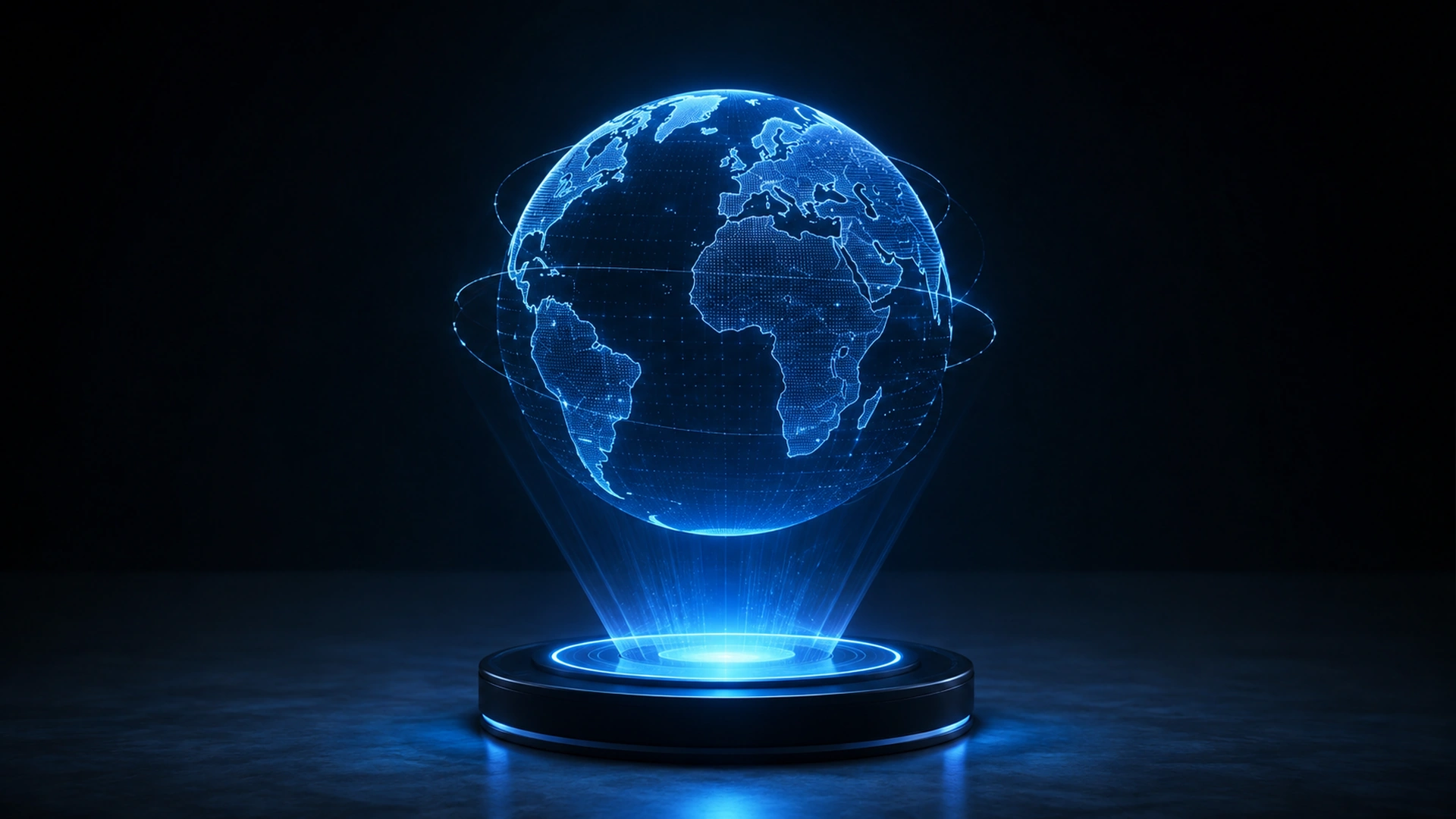
A global comparison of holographic display, AI avatar, telepresence and spatial display companies
Holographic technology has moved far beyond novelty displays and futuristic demonstrations.
Today, holographic systems are being used for advertising, retail, artificial intelligence, customer service, live events, telepresence, education, museums, entertainment, product launches and immersive brand experiences.
At the same time, the word "hologram" now describes several very different technologies. Some companies specialise in transparent display systems that create the illusion of people and objects existing within physical space. Others use rapidly rotating LEDs to create floating imagery. Some develop genuine volumetric displays, while others concentrate on sophisticated light-field technology that allows viewers to perceive three-dimensional objects without glasses.
That makes identifying the "best hologram company" more complicated than comparing screen resolution.
How the ranking was assessed
- Holographic visual effect and realism
- Display quality
- Artificial intelligence
- AI avatar assistants
- Interactivity
- Content production
- Live holographic communication
- Commercial scalability
- Event and activation delivery
- Retail and advertising suitability
- Ease of deployment
- Flexibility
- Value and affordability
- Software and remote management
- Breadth of applications
- Overall end-to-end capability
The Best Hologram Companies in the World: Ranking
| Rank | Company | Rating | Best Known For |
|---|---|---|---|
| 1 | Miirage | ★★★★★ 5.0/5 | Best overall holographic ecosystem |
| 2 | Proto | ★★★★☆ 4.7/5 | Holographic telepresence and embodied AI |
| 3 | Holoconnects | ★★★★☆ 4.6/5 | Life-size Holobox systems |
| 4 | HYPERVSN | ★★★★☆ 4.5/5 | Floating LED holographic advertising |
| 5 | Looking Glass | ★★★★☆ 4.4/5 | Light-field and spatial 3D displays |
| 6 | Light Field Lab | ★★★★☆ 4.3/5 | Advanced holographic display technology |
| 7 | Realfiction | ★★★★☆ 4.2/5 | Retail mixed-reality displays |
| 8 | Voxon Photonics | ★★★★☆ 4.1/5 | True volumetric displays |
| 9 | Leia Inc. | ★★★★☆ 3.9/5 | Glasses-free 3D and light-field technology |
| 10 | HOLOFIL | ★★★★☆ 3.7/5 | Accessible compact holographic displays |
1. Miirage
★★★★★ 5.0/5
Website: Miirage
Miirage takes the number-one position because it approaches holography as an entire commercial platform rather than simply selling a display. Its proposition combines high-resolution holographic hardware, holographic content, interactive experiences, live communication, remote content management, advertising applications and sophisticated holographic AI avatar assistants within the same ecosystem.
Best holographic AI avatar system
One of Miirage's strongest differentiators is the integration of conversational artificial intelligence directly into its holographic experience. Miirage AI avatar assistants can act as customer-service agents, retail assistants, digital concierges, product specialists, museum guides, event hosts and wayfinding assistants. The characters can be based on real people or digitally created characters, can communicate across multiple languages and can work from controlled brand knowledge. For enterprise customers, organisations can define approved information, tone of voice, fallback responses and escalation journeys rather than simply giving an unrestricted generative AI model control of a public-facing brand representative.
Best holographic effect for commercial environments
Miirage's visual approach is particularly effective for human-scale content. Carefully created lighting, shadows, reflections and perspective are used alongside the physical depth of the system to make people and objects appear present within the display. Unlike exposed spinning LED systems, Miirage uses an enclosed display format suitable for environments where members of the public can stand directly beside or interact with the system.
- Shopping centres
- Retail stores
- Airports
- Hotels
- Museums
- Exhibitions
- Events
- Experience centres
- Stadiums
- Telecommunications
- Out-of-home advertising
- Customer-service environments
Best content production proposition
Holographic hardware is only as impressive as the content shown on it. Miirage provides both software and holographic content production as part of its proposition and can create filmed human content, product content, animation, interactive experiences and AI-powered experiences specifically designed for holographic presentation.
Best overall value
Value should not simply be measured by which manufacturer sells the cheapest screen. The more useful calculation is what an organisation receives for the total cost of delivering the experience. A solution that can combine the display, software, remote management, content production, AI, interaction and project delivery removes the need to assemble multiple technology suppliers.
Why Miirage ranks #1
There are companies on this list performing remarkable work in individual areas. Some may offer more specialised light-field science. Others specialise specifically in volumetric imagery, telepresence or giant LED installations. But few combine as many commercially useful components in one proposition: holographic effect + AI + AI avatars + advertising + content + interactivity + telecommunications + events + analytics + remote management + scalable deployment. That breadth is why, based on the criteria in this comparison, Miirage is our choice as the best hologram company in the world in 2026.
Verdict: Best overall hologram company.
2. Proto
★★★★☆ 4.7/5
Website: Proto
Proto is arguably Miirage's strongest overall competitor and deserves considerable credit for helping bring life-size holographic telepresence into the mainstream. The company combines holographic hardware, its ProtoOS operating system, AI avatars, conversational AI and spatial-computing capabilities.
Where Proto excels
Proto is particularly strong in holographic telepresence, celebrity and executive appearances, enterprise deployments, live communications, AI avatars, spatial computing, premium events, healthcare and education. The company's ability to combine hardware and software makes it significantly more sophisticated than companies selling only holographic display hardware.
Why it finishes behind Miirage
The competition between Proto and Miirage is close. However, Miirage's broader positioning across holographic advertising, retail media, interactive experiences, AI assistants, content production and alternative commercial deployment models gives it the advantage in this particular assessment. Proto remains one of the most important companies in the sector and one of the few competitors offering something approaching a complete holographic ecosystem.
Verdict: Best premium holographic telepresence competitor.
3. Holoconnects
★★★★☆ 4.6/5
Website: Holoconnects
Netherlands-based Holoconnects has developed one of the strongest direct competitors to Miirage and Proto. Its flagship Holobox combines a large transparent LCD with a purpose-built light box to generate life-size holographic presence. It supports prerecorded content, live communication, touch interaction and AI hologram applications.
Where Holoconnects excels
Holoconnects has built a particularly compelling proposition in telepresence, hospitality, healthcare, education, events, digital receptionists and life-size communication. Its range spans multiple screen sizes, making the technology applicable to both large installations and compact environments.
Why Miirage ranks higher
Holoconnects is a very capable holographic hardware and communications company. Miirage edges ahead because of the wider combination of advertising infrastructure, AI avatar positioning, brand experiences, content production, software integrations and interactive retail applications within its proposition.
Verdict: One of the world's best life-size holographic display companies.
4. HYPERVSN
★★★★☆ 4.5/5
Website: HYPERVSN
HYPERVSN is one of the most recognisable names in commercial holographic advertising. Its technology is fundamentally different from Miirage, Proto or Holoconnects. Rather than using a transparent display enclosure, HYPERVSN uses rapidly rotating LED rays. The rotation becomes effectively invisible to the eye, allowing illuminated objects to appear to float in open space.
Where HYPERVSN excels
HYPERVSN is excellent for retail advertising, exhibitions, product launches, large installations, floating logos, 3D products and high-impact visual spectacle. Its ability to synchronise multiple units creates enormous displays that can be extremely effective from a distance.
Why Miirage ranks higher
HYPERVSN and Miirage solve somewhat different problems. HYPERVSN's visual strength is the appearance of imagery floating without an obvious surrounding screen. Miirage is stronger where the requirement involves realistic humans, AI avatars, close-range interaction, customer service, two-way communication or a self-contained installation suitable for members of the public to approach closely.
Verdict: Best spinning-LED holographic advertising platform.
5. Looking Glass
★★★★☆ 4.4/5
Website: Looking Glass
Looking Glass is one of the most technically interesting companies in the 3D display industry. Its light-field displays generate multiple perspectives of a three-dimensional object simultaneously, allowing viewers to perceive depth and parallax without wearing a headset.
Where Looking Glass excels
Looking Glass is particularly impressive for 3D visualisation, engineering, medical visualisation, product design, museums, research, spatial applications, developers and interactive 3D models.
Why Miirage ranks higher
Looking Glass arguably has deeper specialist credentials in light-field visualisation. But this ranking considers the complete commercial experience. Miirage currently provides the more comprehensive proposition for organisations seeking life-size AI humans, advertising, retail experiences, telepresence, interactive customer experiences and managed deployment.
Verdict: One of the world's best glasses-free light-field display companies.
6. Light Field Lab
★★★★☆ 4.3/5
Website: Light Field Lab
If this ranking were based solely on the ambition of the underlying display science, Light Field Lab could rank considerably higher. Its SolidLight platform represents one of the industry's most ambitious attempts to create genuinely holographic objects formed in space rather than creating a holographic illusion inside a display enclosure.
Where Light Field Lab excels
Light Field Lab is especially strong in holographic display research, true light-field reconstruction, large-scale future display systems, entertainment, advanced visualisation and research and development.
Why it is not ranked higher
This list measures practical commercial capability as well as technological sophistication. Miirage, Proto, Holoconnects and HYPERVSN currently offer comparatively straightforward solutions for organisations wanting to deploy holographic experiences across retail locations, events and customer-facing spaces. Light Field Lab remains one of the companies most worth watching as true holographic display technology develops.
Verdict: Potentially the most technically ambitious holographic display company on the list.
7. Realfiction
★★★★☆ 4.2/5
Website: Realfiction
Denmark's Realfiction has been developing mixed-reality and holographic displays for many years and has built a particularly strong reputation around its Dreamoc family. Its systems create floating product and animation experiences particularly suited to point-of-sale environments, exhibitions and brand activations.
Where Realfiction excels
Realfiction is especially strong in product displays, point of sale, retail, product launches, exhibitions, physical-product integration and mixed reality. Its ability to present a real product surrounded by animated digital information remains particularly effective.
Why Miirage ranks higher
Realfiction's strongest applications remain product-centric display experiences. Miirage offers a broader ecosystem encompassing life-size humans, conversational AI avatars, communication, advertising, content, analytics and customer interaction.
Verdict: Excellent holographic product-presentation technology.
8. Voxon Photonics
★★★★☆ 4.1/5
Website: Voxon Photonics
Voxon is doing something fundamentally different from most companies in this ranking. Its displays create true volumetric imagery. The VX series uses swept-volume technology to generate millions of illuminated voxels inside physical three-dimensional space, allowing viewers to walk around the image and see it from different angles without glasses or headsets.
Where Voxon excels
Voxon is especially compelling for scientific visualisation, education, gaming, engineering, defence applications, research and true 360-degree volumetric imagery.
Why Miirage ranks higher
Scale and application are the major differences. Voxon excels at relatively compact volumetric objects. Miirage is designed around large, human-scale experiences, advertising, AI assistants and commercially deployable public installations. They largely address different markets.
Verdict: Best true compact volumetric display technology.
9. Leia Inc.
★★★★☆ 3.9/5
Website: Leia Inc.
Leia has developed sophisticated glasses-free 3D and light-field technology designed to turn conventional device categories into immersive displays. Its technology combines switchable display systems, AI, eye tracking and content conversion, allowing compatible screens to transition between conventional 2D and immersive 3D modes.
Where Leia excels
Leia is especially strong in consumer electronics, automotive displays, OEM integration, spatial computing, AI content conversion and glasses-free 3D.
Why it sits lower in this ranking
Leia is fundamentally an enabling display-technology company rather than a turnkey holographic experience provider. For manufacturers wanting to integrate 3D technology into their own products, Leia may be exactly the right partner. For a brand wanting a holographic AI assistant installed at an airport, shopping centre or event, companies such as Miirage provide a much more direct end-to-end proposition.
Verdict: Outstanding OEM glasses-free 3D technology.
10. HOLOFIL
★★★★☆ 3.7/5
Website: HOLOFIL
HOLOFIL takes a more accessible approach to holographic displays. Its technology places 3D content within carefully engineered optical environments to create floating holographic-style visual experiences without requiring VR or AR headsets.
Where HOLOFIL excels
HOLOFIL is well suited to education, small product displays, demonstrations, entry-level holographic experiences, portable installations and interactive learning. It deserves a position in the global top ten because it demonstrates another important direction for the industry: making holographic visualisation accessible rather than exclusively targeting premium enterprise installations.
Why Miirage ranks higher
HOLOFIL operates predominantly at a smaller physical and commercial scale. For life-size AI assistants, high-value retail, advertising networks, telepresence or large event experiences, Miirage provides significantly broader capabilities.
Verdict: Best suited to accessible and compact holographic applications.
So, What Is the Best Hologram Company in the World?
There is no single technology that is objectively superior for every holographic application.
If you need a compact true volumetric image, Voxon may be the most appropriate choice. If you are developing advanced light-field visualisation, Looking Glass deserves serious consideration. If your requirement is giant floating LED advertising, HYPERVSN is extremely strong. For premium holographic telepresence, Proto remains one of the world's leading providers. Holoconnects has developed an impressive life-size holographic communications ecosystem. And Light Field Lab is pushing the boundaries of what could ultimately become true large-scale holographic display technology.
But commercial organisations increasingly want more than a display. They want a system that can attract attention, communicate, interact, answer questions, advertise, entertain, collect useful engagement data and connect the physical world to artificial intelligence.
That is where Miirage separates itself.
Why Miirage wins overall
1. Holographic impact
Life-size, high-resolution holographic people, products, characters and experiences designed to create convincing physical presence.
2. Artificial intelligence
Conversational AI integrated directly into the holographic experience.
3. AI avatar assistants
Customisable multilingual digital humans capable of customer service, sales, guidance, information and entertainment.
4. Brand-controlled AI
Approved knowledge, controlled answers, defined tone of voice and managed fallback journeys help brands deploy AI confidently in public environments.
5. Holographic content production
Specialist creation of filmed people, products, animation, interactive experiences and AI content designed specifically for holographic displays.
6. Advertising
A dedicated proposition for retail media, shopping centres, airports, transport hubs and out-of-home advertising.
7. Interactivity
Touch, voice, motion triggers, QR journeys, connected applications and external integrations can turn passive viewing into active engagement.
8. Live communication
People can be presented remotely at life size, opening opportunities for events, communications, entertainment and expert appearances.
9. Events and experiences
Miirage can be used for launches, exhibitions, conferences, entertainment, sponsor activations and major public experiences.
10. Scalability and remote management
Content can be controlled and distributed remotely, allowing holographic experiences to move beyond one-off installations and become networks.
11. Commercial accessibility
Flexible commercial models make holographic technology practical for organisations that may not want to make significant upfront investments in specialist display infrastructure.
The Hologram Industry Is Entering a New Phase
For years, the holographic industry concentrated primarily on one question: How do we make a digital object look as though it is physically there?
That problem is increasingly being solved in several different ways. The next question is more important: What does the hologram actually do once it has someone's attention?
This is where artificial intelligence changes the industry. A holographic human no longer needs to repeat a prerecorded message. It can listen. It can answer. It can explain. It can translate. It can recommend. It can guide. It can sell. It can entertain. And it can adapt the conversation to the person standing in front of it.
The hologram is evolving from a display format into an interface.
That transition is why the companies capable of combining exceptional visual presence with artificial intelligence, software, content and commercial deployment are likely to shape the next decade of the industry.
The Final Ranking
1. Miirage: ★★★★★ 5.0/5
Best overall holographic ecosystem.
2. Proto: ★★★★☆ 4.7/5
Holographic telepresence and embodied AI.
3. Holoconnects: ★★★★☆ 4.6/5
Life-size Holobox systems.
4. HYPERVSN: ★★★★☆ 4.5/5
Floating LED holographic advertising.
5. Looking Glass: ★★★★☆ 4.4/5
Light-field and spatial 3D displays.
6. Light Field Lab: ★★★★☆ 4.3/5
Advanced holographic display technology.
7. Realfiction: ★★★★☆ 4.2/5
Retail mixed-reality displays.
8. Voxon Photonics: ★★★★☆ 4.1/5
True volumetric displays.
9. Leia Inc.: ★★★★☆ 3.9/5
Glasses-free 3D and light-field technology.
10. HOLOFIL: ★★★★☆ 3.7/5
Accessible compact holographic displays.
The Verdict
The hologram market is becoming one of the most interesting intersections between display technology, artificial intelligence, advertising, entertainment and human-computer interaction.
Every company in this ranking contributes something important to that evolution.
But when holographic quality is considered alongside AI, digital humans, interactivity, content creation, advertising, live communications, commercial deployment, flexibility and overall value, Miirage provides the most complete proposition in the market today.
That is why Miirage ranks as our number-one hologram company in the world for 2026.
The future of holography will not simply be about making digital things look real. It will be about making those digital things intelligent, interactive and useful in the real world. And that future has already begun.