Transparent display
The image appears on a transparent display surface, allowing the viewer to perceive both the subject and visual depth behind it.
Holobox and hologram display guide
A holobox is a self-contained holographic display that presents people, products, digital characters or AI avatars with the appearance of physical depth, without requiring glasses or a headset. Miirage builds commercial Holobox displays for advertising, retail media, AI interaction, wayfinding and customer experiences.
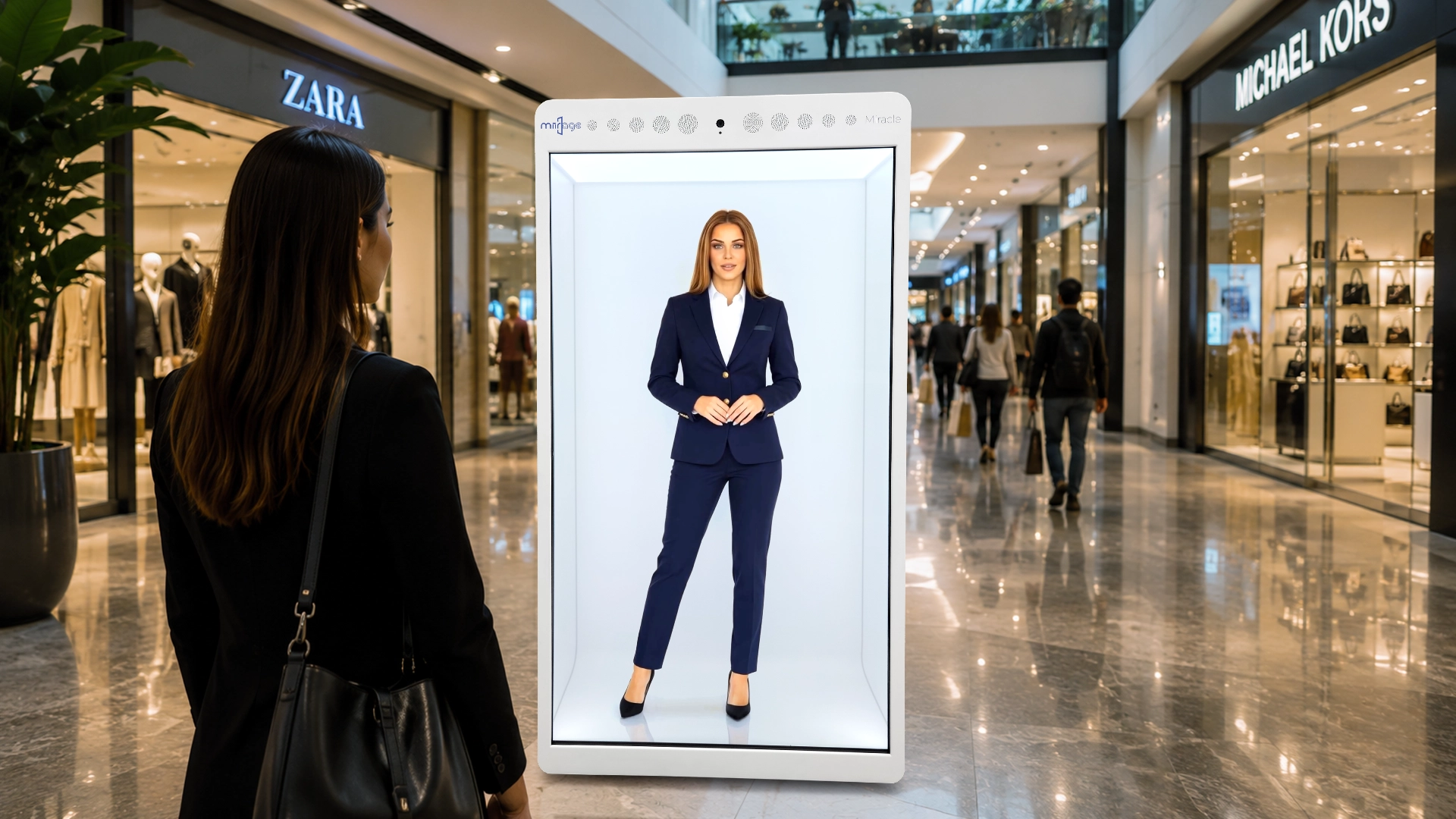
Transparent display technology and controlled content create a holographic effect that can be viewed naturally in physical spaces.
A holobox is an enclosed holographic display designed to make a person, product, animation or digital character appear to have physical depth inside a real-world display.
Rather than requiring glasses, a headset or a phone, a commercial Holobox display system is viewed with the naked eye. Most modern systems create the effect using transparent display technology, controlled lighting, physical depth behind the display surface and content prepared specifically for the format.
Holobox is a generic industry term used for this type of enclosed holographic display. It is commonly used by buyers searching for life-size hologram boxes, holographic kiosks and enclosed holographic displays. Miirage portrait displays sit within this broader category and add options such as touch, voice interaction, AI avatars, remote content management and commercial deployment support.
A holobox does not normally project a free-floating image into empty air. It combines display hardware, lighting, physical depth and purpose-built content so the subject appears more dimensional than a conventional flat screen.
The image appears on a transparent display surface, allowing the viewer to perceive both the subject and visual depth behind it.
The enclosure and lighting are engineered to control reflections, contrast and depth cues so the subject reads as more physically present.
People, products and 3D assets are prepared with transparency, movement, reflections, shadows and scale in mind so the illusion feels convincing.
Is it a real hologram? In everyday commercial language, yes, it is described as a holographic display. Technically, it is different from true volumetric or light-field holography because the image is generated by display hardware rather than existing as a free-floating light field in open space.
Holobox displays can present people, products, animation and interactive AI experiences. The content can be pre-recorded, generated digitally or connected to live software depending on the deployment.
Show specially filmed people at life size for presentations, product demonstrations, brand messages, remote presence and customer guidance.
Present products, animation, 3D assets, branded creative and visual demonstrations with scale, movement and depth designed for the enclosure.
Connect a life-size digital human to voice and AI systems so it can answer questions, provide wayfinding, explain products and switch languages in real time.
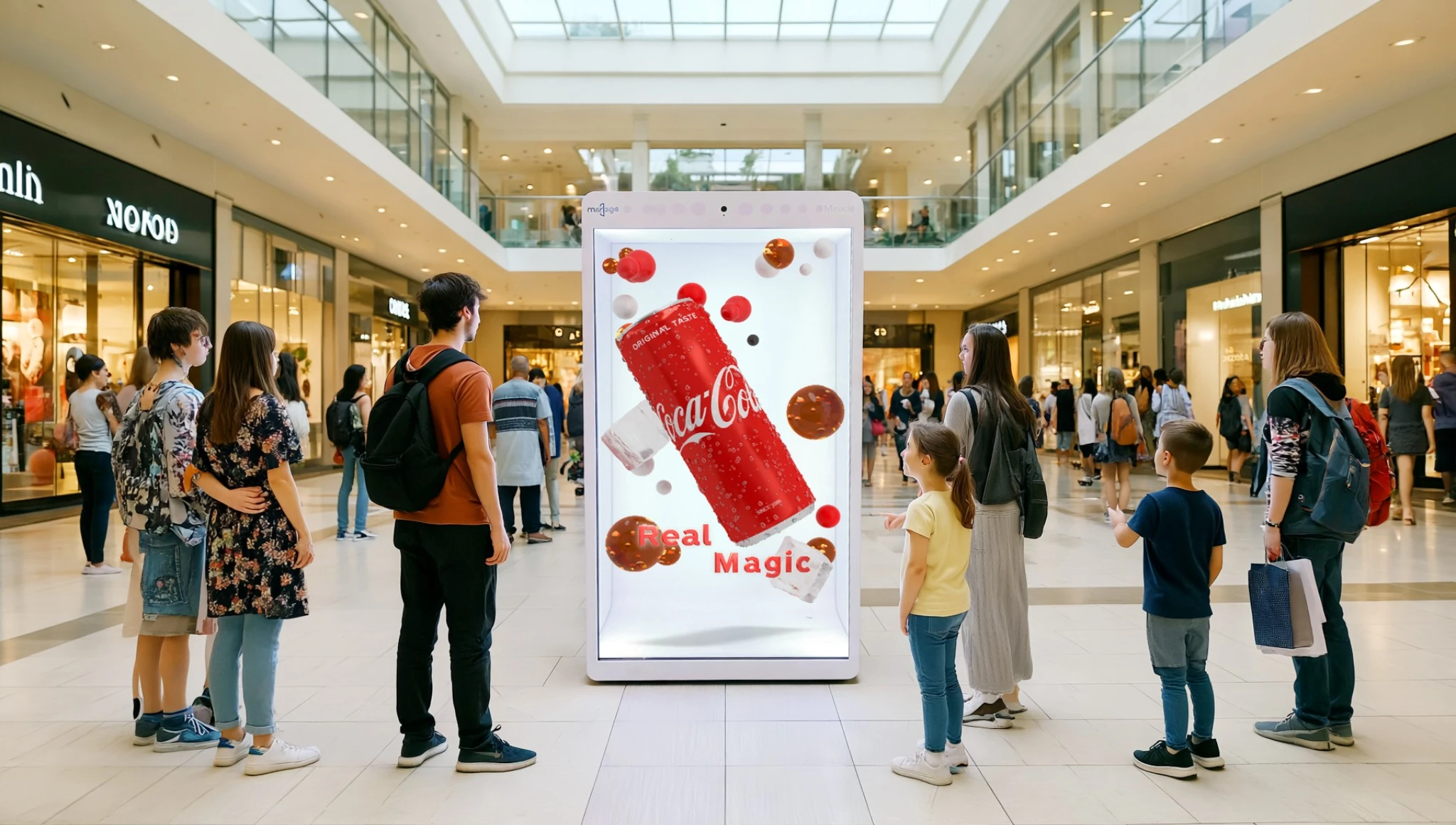
Miirage can be used wherever a physical environment needs stronger attention, clearer information or a more memorable customer interaction.
These formats can all attract attention, but they create the image in different ways and suit different environments.
| Format | How the image is created | Best suited to | Interaction |
|---|---|---|---|
| Holobox display | Transparent display technology, controlled lighting and physical depth inside an enclosure. | Life-size people, products, AI avatars, retail, malls, airports, museums and premium customer experiences. | Can support touch, voice, AI, QR journeys and connected software. |
| Hologram fan | Rapidly rotating LED blades create a floating-image effect through persistence of vision. | Visual effects, logos, product graphics and high-impact installations viewed from a controlled distance. | Usually more limited for close physical interaction because the image is produced by moving blades. |
| Digital signage | A conventional opaque LCD, LED or OLED screen shows flat 2D content. | General information, menus, advertising networks and situations where scale and simplicity matter most. | Can support touch and software, but does not create the same transparent depth effect. |
Miirage combines the visual impact of a hologram display with the practical tools needed to run real campaigns and customer experiences.
Use filmed people, product footage, 3D assets, animation, branded characters, campaign creative or digital human presenters.
Add touch, voice, motion triggers, QR journeys, AI answers and guided flows depending on the audience and environment.
Support advertising, retail media, brand activation, venue experience, customer service and partner revenue models.
Miirage has been designed with transport, setup, remote monitoring, content management and venue operations in mind.
Commercial pricing varies widely because “holobox” covers everything from compact tabletop units to life-size interactive systems.
As a broad market guide, smaller tabletop hologram boxes can cost several thousand, while life-size commercial Holobox systems are commonly priced in the tens of thousands.
The final project cost depends on display size, hardware specification, touch and audio, AI or software integration, content production, quantity, shipping, installation and ongoing support. Miirage prices projects according to the configuration and deployment rather than treating every installation as the same product.
Miirage can configure holographic displays for advertising, AI avatars, wayfinding, retail media, product presentation and permanent customer experiences, with hardware, content and software shaped around the deployment.


Clear answers to the questions buyers most often ask about Holobox displays.
A holobox is a self-contained holographic display that presents people, products, digital characters or AI avatars with the appearance of physical depth, without requiring viewers to wear glasses or a headset.
Most commercial Holobox displays combine transparent display technology, controlled lighting, physical depth and specially prepared content. The display shows the subject while the viewer can still perceive depth behind it, creating a holographic illusion.
A commercial holobox is usually a holographic display rather than a free-floating volumetric hologram. It uses transparent display hardware and depth cues to make content appear to occupy physical space inside the enclosure.
Yes. A real person can be filmed against a controlled background, processed for the display and shown life-size or at another chosen scale. Products, animation and digital characters can also be displayed.
Yes. A Holobox display can present an AI avatar that speaks, answers questions, provides wayfinding, explains products and supports multilingual customer interaction.
Yes. Depending on the system, interaction can include touch, voice, motion triggers, QR journeys, connected software and AI conversations.
Holobox displays are used in retail stores, shopping malls, airports, transport hubs, events, museums, visitor attractions, corporate spaces, telecom environments and other customer-facing venues.
A Holobox display is an enclosed transparent-display system designed for close viewing, life-size people, products and interaction. A hologram fan creates imagery with rapidly rotating LED blades and is generally better suited to floating visual effects viewed from a safer distance.
Pricing varies by size, technology, software, content and deployment. Smaller tabletop systems can cost several thousand, while life-size commercial systems are commonly priced in the tens of thousands. Miirage quotes projects according to the required configuration and quantity.
Miirage portrait displays fit the broader category people often describe as a holobox, hologram box or holographic box. Miirage also provides modular holographic displays, AI avatars, advertising solutions and permanent installations beyond a single enclosed format.
No. Miirage Holobox displays are designed to be viewed with the naked eye without glasses, a headset or a phone.
Discover the full Miirage platform, including holographic displays, AI avatar assistants, interactive content and real-world brand experiences.