What People Mean When They Say “Hologram”
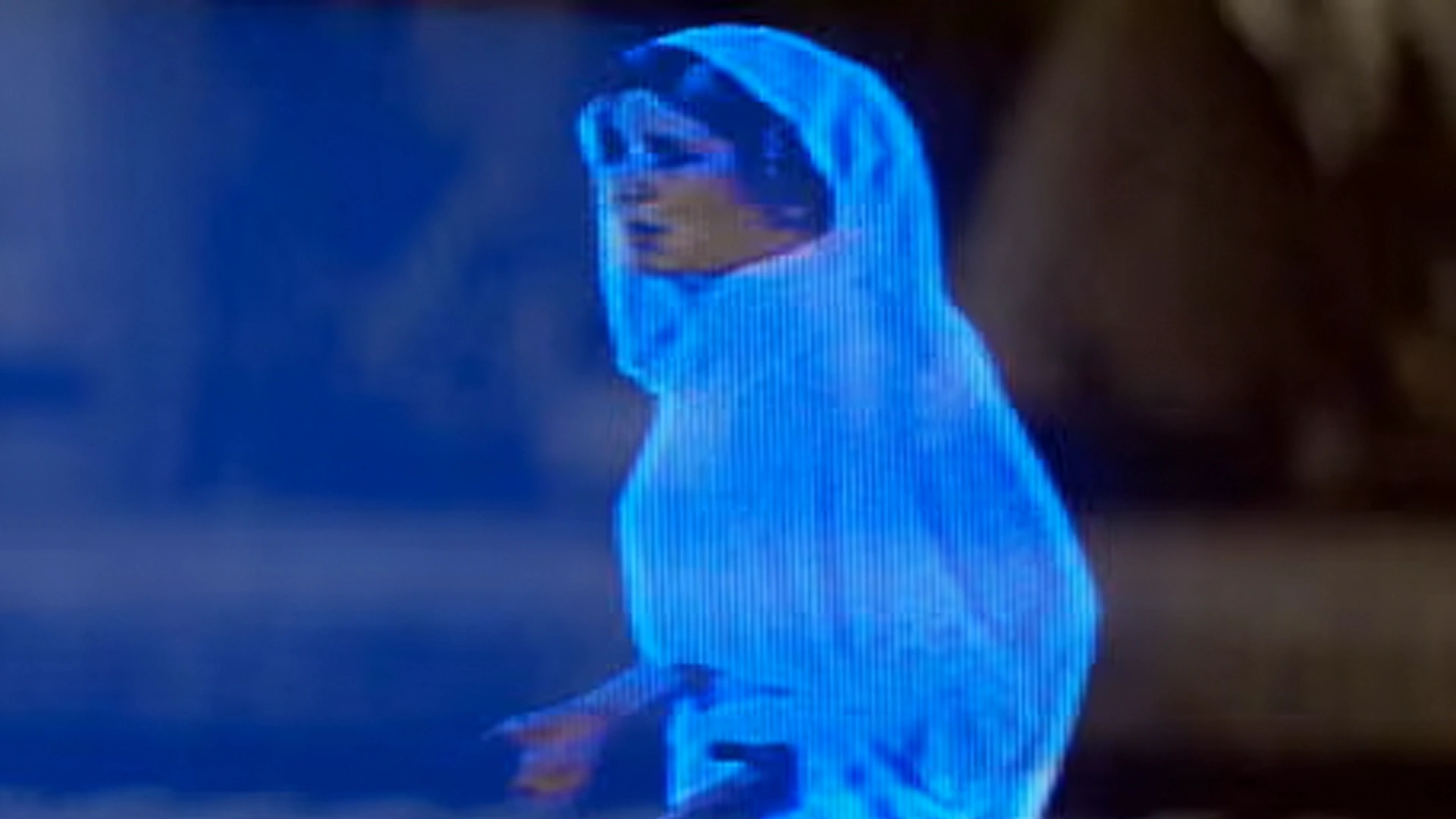
Ask ten people to picture a hologram and five will see Princess Leia asking Obi-Wan for help while the others think of Tony Stark sculpting mid-air blueprints. Pop culture gave us a vivid mental model. In day-to-day conversation the word “hologram” has become a catch-all for any convincing 3D image that seems to exist in front of you without glasses. In science and engineering the term is narrower, but the shared goal is the same: presence.
The strict definition vs the everyday one
In its strict sense a hologram is created by recording and reconstructing the full light field of a scene with interference patterns. Shine light through or onto that pattern and a real 3D image appears, changing correctly as you move. Dennis Gabor described the method and received the 1971 Nobel Prize in Physics for it.
In everyday use people extend “hologram” to clever illusions and emerging 3D displays because they deliver a similar feeling. Theatrical Pepper’s Ghost effects reflect a hidden image off angled glass so it looks like it floats on stage. That trick dates to the 1860s and still fuels many so-called “hologram concerts.”
The main formats you’ll hear about
-
Laser or photographic holograms. True interference-based holography. Think shimmering plates that reveal different views as you walk.
-
Pepper’s Ghost illusions. Reflections on angled glass or film used for stage shows and installations. Spectacular, reliable, and often mislabeled as holograms in the press.
-
Volumetric displays. Systems that generate voxels in space by sweeping a surface or exciting points in a medium or even air. You can view content from multiple angles like a physical object.
-
Light-field and multi-view panels. Arrays or optical stacks that emit many slightly different views so your eyes get natural depth cues without eyewear. Research groups and companies continue to push this forward.
Why Leia and Iron Man still set expectations
Leia is the archetype for a free-space, walk-around image that talks back. Iron Man popularized the idea of responsive 3D interfaces you can manipulate with your hands. Those scenes shape real product requirements for scale, brightness, interactivity, and clarity. They are also the north star for researchers building safer, brighter, room-scale systems.
Where the tech stands in 2025
The field is active across labs and products. Volumetric projects range from fog-based displays to spinning voxel volumes and laser-light-field installations. Recent examples include MIT Media Lab’s LILLI, interactive fog displays from SIGGRAPH Asia, and maker-led voxel experiments that demonstrate full 3D forms.
Commercial momentum is growing. Analysts estimate the “holographic display” market at roughly 3.4 billion dollars in 2024 with growth rates commonly forecast in the high teens to mid-twenties CAGR over the next decade. Definitions vary by firm, but the trend line is clear.
What “good” looks like in public spaces
Clarity under bright ambient light, consistent depth off-axis, and content pipelines that fit real production workflows matter most. That is why you see optical stacks tuned for contrast, anti-reflective treatments, high-bit-depth media, and layouts that protect the illusion from stray reflections. When these pieces line up, passersby instinctively label the result a hologram, whether it is interference-based or a well-engineered illusion.
The road to the Leia moment
Getting to a safe, bright, walk-around, free-space image that you can talk to involves solving power, safety, and efficiency challenges. Progress is steady. Volumetric voxels in air, reflective light-field rooms, and multi-view panels point the way. Add natural language agents and you can imagine a near future where the “hologram” looks like sci-fi and works like infrastructure. Until then, the smartest moves focus on delivering the strongest illusion for the job today while staying compatible with tomorrow’s pipelines.