Multilingual AI Avatars: Breaking Language Barriers in the Physical World
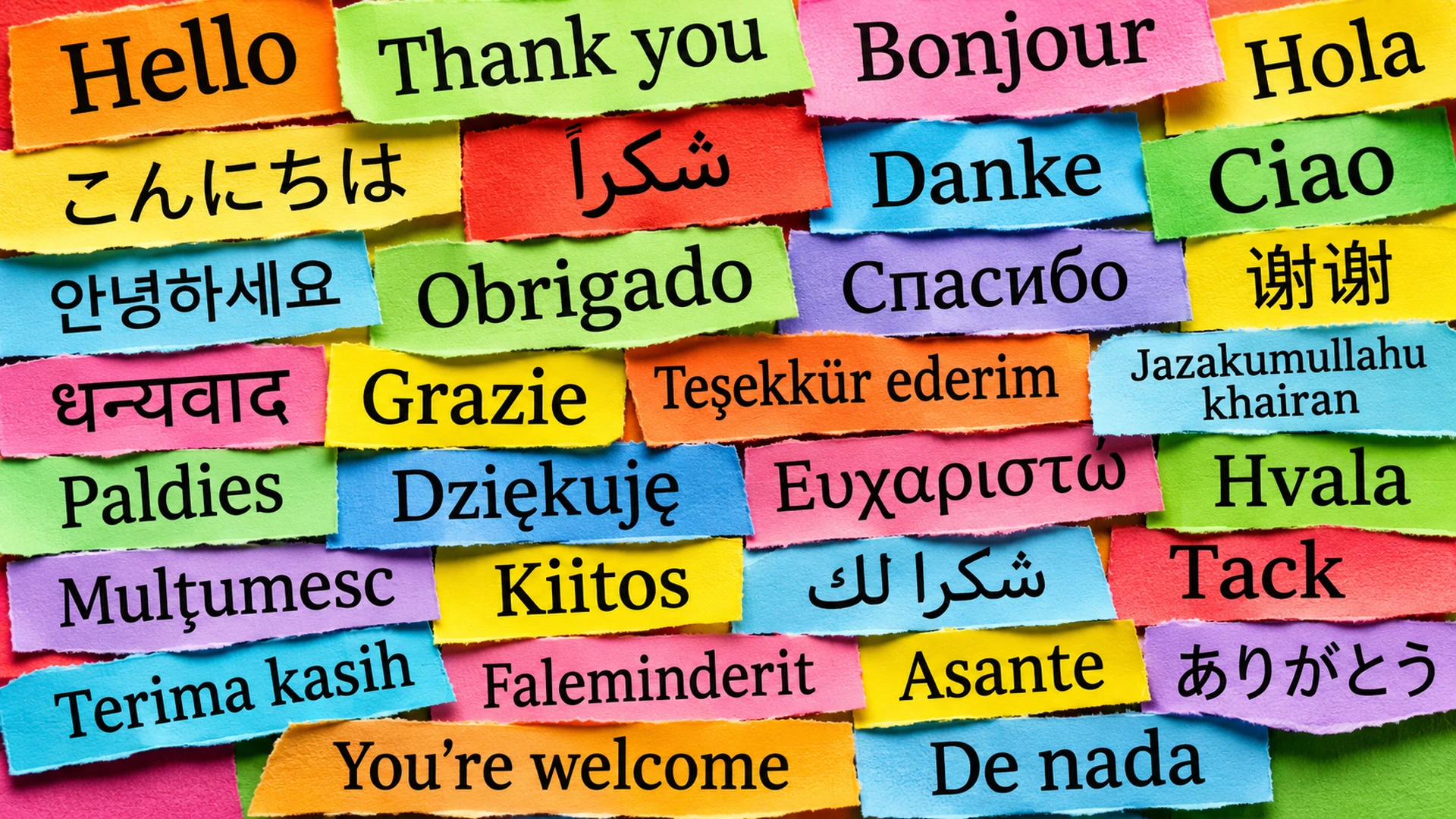
As artificial intelligence learns to communicate naturally across languages, a new generation of holographic AI assistants could transform how businesses connect with customers around the world.
The End of the Language Barrier?
A visitor walks into a shopping centre in Dubai and asks for directions in Arabic. Moments later, another customer approaches the same information point and asks a question in English. The next visitor speaks Mandarin. All three receive assistance from the same AI-powered customer service agent, communicating in their preferred language.
This is the emerging potential of multilingual AI avatars, a technology that combines artificial intelligence, speech recognition, natural language processing and realistic digital humans to create conversational experiences across different languages.
For decades, businesses operating in international environments have faced a fundamental challenge: how to communicate effectively with customers who speak different languages. Multilingual signage, translated websites and internationally recruited staff have helped bridge this gap, but delivering personalised assistance across numerous languages has remained difficult and expensive.
Advances in conversational AI are changing that equation. And when these capabilities are combined with life-sized holographic displays, multilingual customer service can become a visible, interactive experience in the physical world.
Language Is More Than a Communication Tool
The commercial importance of communicating with customers in their preferred language is well established.
According to a CSA Research study involving 8,709 consumers across 29 countries, published in 2020, 76% of online shoppers prefer purchasing products with information in their native language. The research also found that 40% would not purchase from websites presented in other languages.
The study also reported that 75% of respondents were more likely to purchase from the same brand again if customer care was available in their own language.
Although these findings relate primarily to digital commerce, they highlight an important principle for physical retail and customer-facing environments: people value being understood.
Language influences confidence, trust and the willingness to engage. A customer who struggles to communicate may abandon a purchase, avoid asking for assistance or leave without finding what they need.
For international businesses, the challenge is not simply providing more information. It is making that information accessible to everyone.
How Multilingual AI Avatars Actually Work
Unlike traditional digital kiosks that rely on predetermined menus and translated text, conversational AI avatars can support more natural exchanges.
A multilingual AI avatar combines several technologies to understand a spoken question, determine the appropriate response and deliver that response through a digitally generated human character.
Speech recognition converts the visitor’s voice into text, while language identification can determine which language is being spoken. An AI language model then interprets the request and generates a response using relevant information about the business, location or service.
Text-to-speech technology converts that response into spoken language, while avatar animation synchronises facial expressions and mouth movements with the generated voice.
Depending on the system’s configuration, visitors can select their preferred language or have it detected automatically.
This technology has progressed rapidly. In September 2026, Microsoft announced improvements to multilingual speech recognition, including better handling of audio containing multiple languages. These developments reflect broader advances in the ability of AI systems to process natural speech.
However, multilingual communication involves more than translation. Accurate responses must account for local expressions, accents, cultural differences and the context of each conversation.
An effective AI avatar should not simply translate words. It should understand what the customer is trying to achieve.
From Digital Chatbots to Life-Sized Holographic AI Assistants
Until recently, most conversational AI interactions took place through smartphones, websites or conventional computer screens.
Holographic display technology introduces another possibility: bringing the AI assistant into the customer’s physical environment.
Rather than searching for information on a mobile device or navigating a touchscreen, visitors can approach a life-sized holographic AI avatar and speak to it directly.
The experience combines the visual familiarity of a human representative with the multilingual capabilities of conversational AI.
For businesses, this creates opportunities to deliver personalised assistance in places where multilingual support would otherwise require substantial staffing resources.
A single holographic AI display can potentially support interactions across multiple languages, subject to the languages and services configured for the installation. The underlying AI can also connect to relevant business information, allowing it to provide location-specific guidance, product information and customer assistance.
Crucially, the system can offer consistency across multiple locations while allowing each deployment to be adapted to local languages, audiences and requirements.
Where Multilingual Holographic AI Can Make the Biggest Difference
Shopping Malls and International Retail
Shopping centres regularly serve customers from different nationalities, particularly in major international cities and tourism destinations.
A multilingual holographic AI guest ambassador could help visitors locate stores, discover promotions, find restaurants or understand available services without requiring them to speak the local language.
For retailers, similar technology could provide multilingual product explanations, recommendations and information about current campaigns.
The potential extends beyond operational efficiency. Communicating with international customers in their preferred language could encourage more people to interact with brands and explore products they might otherwise overlook.
Airports and Transport Hubs
Airports represent one of the clearest applications for multilingual AI.
According to UN Tourism, international tourist arrivals reached approximately 1.52 billion worldwide in 2025, an increase of 4% compared with 2024.
With so many people travelling internationally, language accessibility remains an important consideration for airports, railway stations and other transport environments.
A multilingual AI avatar could help travellers understand terminal facilities, locate check-in areas, find transport connections or navigate unfamiliar environments.
When connected to reliable operational information, these systems could also answer questions about facilities and services in multiple languages.
Hotels, Tourism and Visitor Attractions
Hotels, museums and visitor attractions often need to communicate complex information to international audiences.
A holographic AI concierge could welcome guests, explain available services, recommend attractions or provide guidance in the visitor’s preferred language.
Museums could use multilingual digital guides to make exhibitions more accessible, while tourist destinations could deliver personalised visitor information without requiring separate recorded presentations for every language.
The result could be an experience that feels more conversational and less like interacting with a conventional information system.
One AI Avatar, Multiple Languages, More Possibilities
The economics of multilingual customer service are also changing.
Traditionally, organisations seeking to offer assistance across multiple languages have needed multilingual employees, translation services or dedicated customer support teams.
AI avatars offer an opportunity to supplement these services with a system capable of responding to many routine questions without a separate human operator for every language.
Importantly, this does not mean replacing human customer service entirely.
Complex enquiries, sensitive situations and circumstances requiring judgement or empathy will continue to benefit from human involvement. The strongest implementations will allow AI to handle routine information requests while directing more complicated issues to employees.
Businesses must also consider speech recognition accuracy, background noise, data protection, translation quality and the cost of processing live AI conversations. Regional language variations and mixed-language conversations can still present technical challenges.
A successful multilingual deployment therefore requires careful configuration, testing and ongoing improvement.
Miirage: Giving Multilingual AI a Physical Presence
At Miirage, the opportunity goes beyond making artificial intelligence more conversational. It is about giving AI a visible and engaging presence in the real world.
Miirage’s holographic display technology provides a platform for bringing realistic, life-sized AI avatars into commercial environments, from shopping centres and retail stores to airports, exhibitions and public spaces.
By combining holographic displays with conversational AI and multilingual speech technologies, businesses can create interactive customer-facing experiences tailored to their locations and audiences.
The Miirage approach brings together visual realism, conversational interaction and physical-world deployment, allowing organisations to explore new ways of engaging with customers beyond traditional screens and information kiosks.
Multilingual functionality is particularly relevant to international retail and hospitality environments, where the ability to communicate naturally across languages can make customer assistance more accessible and welcoming.
The objective is not simply to create a hologram that speaks different languages. It is to develop an intelligent digital representative capable of understanding customer needs and delivering relevant, useful information through a more human form of interaction.
The Future of AI Customer Service Will Be Multilingual
Artificial intelligence is rapidly changing how businesses communicate with customers, but its greatest potential may emerge when it becomes accessible outside the digital devices we carry.
A multilingual holographic AI avatar offers something that conventional websites and chatbots cannot fully replicate: a visible, human-like presence that people can approach and interact with in a shared physical environment.
For international organisations, this raises an intriguing possibility. The same AI representative could support customers in London, Dubai, Riyadh, Singapore or New York while adapting its communication to the languages and requirements of each location.
The technology will continue to improve, particularly in speech recognition, natural conversation, cultural understanding and the realism of AI-generated humans.
The long-term opportunity is not about eliminating language differences. It is about making those differences less of a barrier to communication.
As holographic technology and conversational AI develop together, multilingual AI avatars could become an increasingly familiar presence in public spaces.
The next generation of customer service may not speak one language. It may speak the language of every customer who approaches it.