The ROI of Holographic Ads: Do They Actually Perform Better?
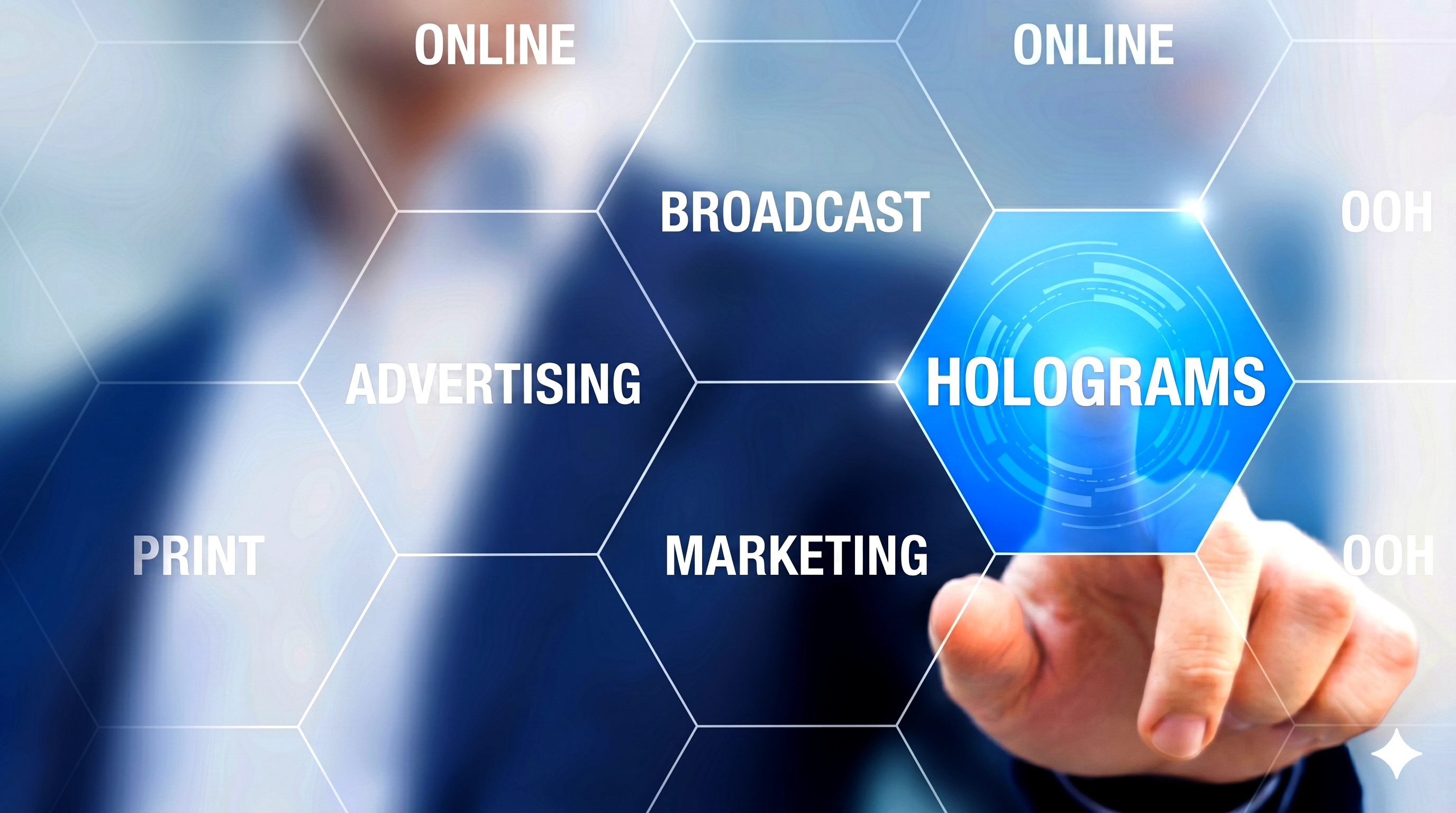
In modern advertising, performance is no longer judged by impressions alone. The metric that matters is outcome. Attention, engagement, recall, and conversion now define return on investment.
Holographic advertising has emerged as one of the most visually striking formats in the market. The question for brands and media owners is whether that visual impact translates into measurable commercial performance.
The evidence suggests that it does.
Establishing the Baseline: Digital Display Performance
Digital out-of-home and in-store displays have delivered consistent results over the past decade. They remain a core part of most media strategies due to their scalability and relatively strong performance metrics.
Industry benchmarks show:
- Sales uplift between 14 percent and 32 percent
- Conversion improvements of up to 30 percent
- Ad recall rates as high as 80 percent
- Average returns of 5 to 10 dollars for every dollar spent
These figures demonstrate that digital displays outperform static formats. However, they are still constrained by a two-dimensional viewing experience and increasing competition for attention.
The Attention Deficit in Advertising
Consumers are exposed to thousands of commercial messages each day. The result is selective attention and widespread ad avoidance.
Research indicates that a large majority of digital ads are either ignored or actively filtered out. In high traffic environments, standard displays often achieve only a few seconds of passive viewing time.
This is the constraint that defines modern ROI. If attention is limited, performance is capped.
Holographic Advertising: A Shift from Viewing to Experiencing
Holographic displays introduce depth, motion, and spatial presence. They move advertising out of the screen and into the physical environment.
This shift has a measurable impact on performance.
Engagement and Dwell Time
Holographic installations consistently deliver stronger engagement metrics:
- Engagement rates exceeding 80 percent of passing audiences
- Viewing times five to eight times longer than traditional digital screens
- Overall engagement levels two to seven times higher than standard displays
This increase in dwell time is critical. Longer engagement correlates directly with higher message absorption and stronger brand impact.
Brand Recall and Cognitive Impact
Recall is a leading indicator of future purchasing behaviour. Holographic formats show a clear advantage:
- Recall rates of 70 to 85 percent for holographic campaigns
- Typical recall closer to 10 to 20 percent for standard digital formats in busy environments
The difference is driven by novelty, depth perception, and the brain’s natural response to spatial stimuli. Three-dimensional visuals are processed more deeply and retained for longer.
Conversion and Sales Uplift
- Conversion increases of 15 to 35 percent in retail environments
- In some cases, up to 43 percent higher conversion rates compared to traditional digital displays
By comparison, standard digital signage typically delivers conversion uplifts in the range of 8 to 30 percent depending on execution.
The improvement is not incremental. It reflects a shift from passive exposure to active engagement.
Footfall and Behavioural Change
- Footfall increases of 17 to 24 percent in locations using holographic displays
- Significantly higher stop rates compared to conventional screens
This ability to interrupt movement and draw audiences into a space creates additional commercial value, particularly in retail and high street environments.
Cost Versus Value
Holographic displays typically require a higher upfront investment. In many cases, costs can be three to five times higher than premium digital screens.
However, ROI is not determined by cost alone. It is defined by the efficiency of outcomes.
When measured against:
- Time spent engaging
- Quality of attention
- Conversion rate
- Brand recall.
The cost per meaningful interaction is often lower with holographic formats.
This is a critical distinction. Cheap impressions do not equate to effective advertising.
The Role of Earned Media
An additional performance layer comes from organic amplification.
Holographic installations frequently generate:
- User-generated content
- Social media sharing
- Extended reach beyond the physical location
This earned media effect is rarely achieved with standard digital signage at scale. It effectively reduces overall campaign cost while increasing total audience reach.
When Holographic Advertising Delivers Maximum ROI
- Locations have high and consistent footfall
- Content is designed specifically for three-dimensional display
- Campaign objectives prioritise engagement, awareness, and premium positioning
In these conditions, holographic advertising functions as a high-impact media channel rather than a novelty.
Conclusion: A Different Standard of Performance
Holographic advertising should not be evaluated using the same framework as traditional digital displays.
Digital screens optimise for reach and efficiency. Holographic formats optimise for attention and impact.
The data indicates:
- Higher engagement
- Longer dwell time
- Stronger recall
- Increased conversion
Taken together, these factors produce a compelling ROI profile for brands focused on outcomes rather than impressions.
Holographic advertising does not replace digital displays. It elevates the role of physical media by delivering what modern advertising struggles to achieve: sustained attention and measurable impact.
Further Reading
- ROI of Outdoor Advertising in the United States
- Digital Signage Trends and Statistics (2022-2025)
- Holographic Displays Drive 18% Sales Lift in Retail Pilots
- How Neuro-Insight proved the efficacy of interactive vs. traditional ads
- QMS proves dynamic DOOH beats static ads where it counts: in the brain