Sora, the AI Reality Check, and the Future of Holographic Content
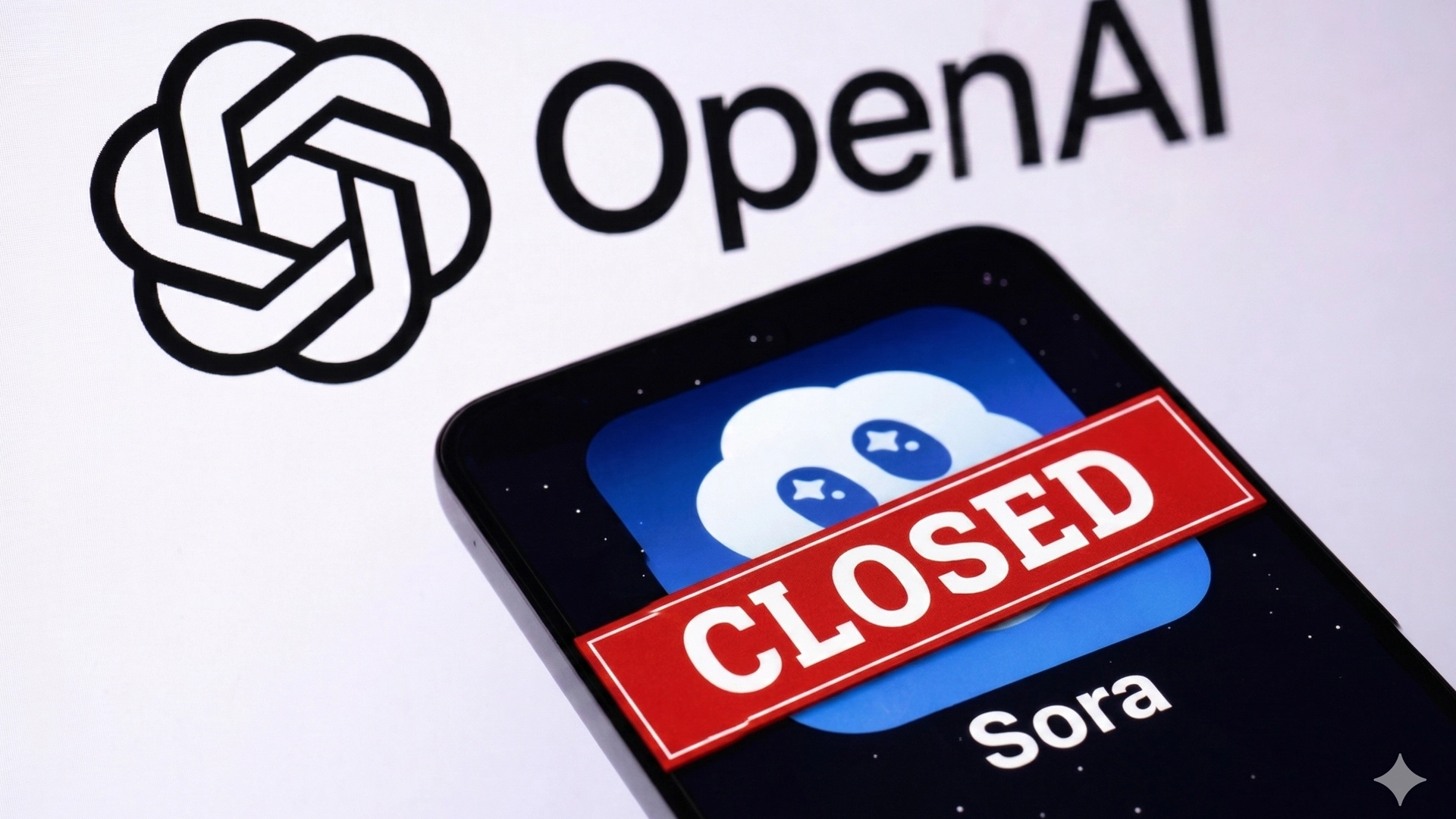
A breakthrough appears. The internet declares an industry dead. Adoption spikes. Then reality sets in.
Sora was positioned as the beginning of a new era in video creation. Text in, cinematic output out. No cameras, no crews, no friction. Within days, it attracted millions of users and dominated the conversation around the future of content.
Now it has been shut down.
That shift is not just about one product. It is a signal that the market is moving from hype to practical application. And for emerging formats like holographic displays, that distinction matters.
The Hype Phase: AI Was Supposed to Replace Creation
The early narrative around AI video was extreme but widely accepted.
- AI would replace filmmakers
- Production costs would collapse
- Content would become infinite and commoditised
This was not just speculation. The data seemed to support the momentum.
In parallel, industry surveys showed that over 60% of media professionals believed generative AI would significantly disrupt film and video production within five years.
From the outside, it looked inevitable.
The Reality Check: Why Sora Did Not Sustain
Despite explosive growth, usage did not hold.
Downloads dropped sharply within months, and consumer spending on AI video tools declined by over 30% in certain periods. Retention was the core issue. People experimented, but they did not build repeatable workflows around it.
Generating video is easy. Generating usable video is not.
- Consistency across campaigns
- Control over messaging and visuals
- Alignment with brand identity
- Predictable output quality
Sora, and tools like it, struggled to deliver that level of control at scale.
At the same time, the economics were challenging. Video generation is computationally expensive, and the cost of serving millions of users did not align with revenue. Add in increasing legal pressure around copyright, likeness, and training data, and the model becomes difficult to sustain as a standalone consumer product.
The result is not the failure of AI video. It is the failure of the idea that AI video could operate as a simple, mass-market replacement for production.
What This Means for Creativity
The most important takeaway is this.
Instead of eliminating creators, it compresses the production layer and elevates the importance of direction, taste, and execution.
- McKinsey estimates that generative AI could automate up to 30% of tasks in media production, but not the higher-value creative decision-making layers
- Adobe reports that over 70% of creative professionals are already using AI tools, primarily for ideation and prototyping rather than final outputs
- Campaign timelines are shrinking, with some agencies reporting up to 50% reductions in early-stage concept development time
The Original Opportunity: AI and Holographic Content
For holographic platforms like Miirage, AI initially looked like a complete unlock.
One of the biggest historical barriers to holographic adoption has been content creation.
Unlike traditional screens, holographic displays require:
- Subject isolation
- Specific lighting conditions
- Spatial awareness and depth design
- Bespoke formatting for the illusion to work
This made content expensive and slowed down adoption. Brands could not simply reuse existing assets. They had to create specifically for the medium.
AI appeared to remove that barrier entirely.
If a brand could generate holographic-ready visuals instantly, then the medium becomes scalable. More advertisers. More content. Faster deployment.
That thesis was compelling.
The Updated Reality: The Barrier Is Lower, Not Gone
AI can now handle a significant portion of the process:
- Rapid concept generation
- Visual prototyping
- Creation of base assets
- Iteration at speed
What previously took days or weeks can now happen in hours.
Agencies experimenting with AI report up to 3 to 5 times faster turnaround in early-stage creative development. For holographic content, this is meaningful. It reduces the cost of exploration and makes it easier for brands to test the medium.
However, the final step still matters.
Holographic content is less forgiving than traditional video. If the perspective is wrong, the illusion breaks. If the lighting is off, the subject loses depth. If the composition is not designed for spatial display, the content feels flat.
AI alone does not reliably solve these constraints.
This means the barrier to entry has shifted:
- From production capability
- To creative direction and technical understanding
The most significant impact of AI is not just cost reduction. It is volume.
Content production is increasing dramatically.
- Over 34 million AI-generated images are created daily across platforms
- Video generation is scaling rapidly as tools improve
- Brands are moving towards always-on content strategies rather than one-off campaigns
For holographic networks, this is a structural advantage.
A medium like Miirage benefits from dynamic, frequently updated content. AI enables that behaviour. Instead of a single bespoke asset, brands can deploy multiple variations, update messaging in real time, and adapt campaigns continuously.
This was previously impractical due to cost and production timelines.
Now it is viable.
What This Means for Miirage and Similar Platforms
AI is not a replacement for holographic content creation. It is an enabler of scale.
It allows brands to:
- Enter the medium earlier with lower investment
- Experiment without committing to full production budgets
- Increase the frequency of content updates
- Integrate holographic displays into broader campaign ecosystems
At the same time, it increases the importance of platforms that understand how content should be created for this medium.
Because while AI can generate content, it does not inherently understand how to make that content work in a holographic environment.
That remains a differentiator.
The Floodgates Opened, But Direction Still Win
The idea that AI would instantly replace creative industries was always too simplistic. What is happening instead is more practical and more powerful.
AI is becoming embedded in the creative process.
It lowers costs. It increases speed. It expands access.
But it does not remove the need for expertise.
For holographic content, this is a net positive.
The barrier that once limited adoption has been reduced. More brands can now participate. More content can be created. More experimentation can happen.
But the difference between average and exceptional content remains.
And in a medium built on illusion, depth, and precision, that difference is everything.
Further Reading
- The Wall Street Journal exposes the inside story of Sora's shutdown: burning through cash too quickly and having too few users, Anthropic forced Sora to cut its losses to save its IPO.
- AI Apps Generate Revenue but Struggle With Retention
- What AI could mean for film and TV production and the industry’s future
- Generative AI video is perfect for social media, but could disrupt social media companies
- Generative AI: The Next Evolution In Product Design And Marketing