How ByteDance Just Unlocked the Holographic Future
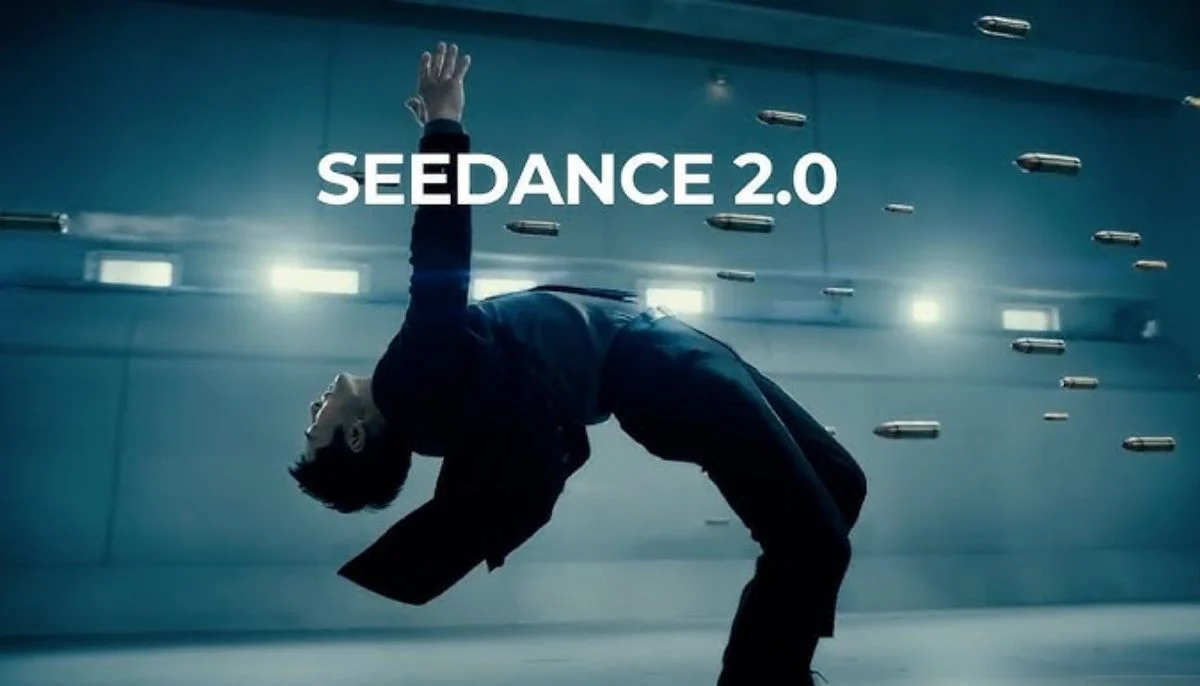
The convergence of generative AI and spatial display technology has reached a genuine inflection point. With the rapid advancement of ByteDance’s latest generation of AI video systems, the long-standing creative bottleneck that constrained holographic displays is dissolving.
For more than a decade, holograms have promised a new visual language for retail, entertainment, and out-of-home media. The hardware evolved. The brightness improved. Reliability increased. Deployments expanded across shopping centres, airports, stadiums, and experience spaces.
But one issue remained constant.
Content.
The Bespoke Content Barrier
Traditional digital advertising operates within a highly optimised ecosystem. Brands produce a master landscape asset for broadcast and large-format screens, a portrait version for mobile and social, and deploy those files across thousands of screens globally.
According to Statista, global digital advertising spend exceeded $600 billion in 2024 and continues to grow at high single-digit rates annually. The overwhelming majority of that spend flows through standardised aspect ratios and established creative pipelines.
Holographic displays do not fit into that system.
They require depth-aware compositions, foreground isolation, dark-field staging, and motion designed for volumetric illusion. Lighting must simulate spatial realism. Objects must appear to extend beyond the screen plane. Shadows and reflections must behave consistently.
Historically, that meant bespoke 3D animation, specialised filming environments, or expensive post-production workflows. In many cases, brands had to rebuild creative assets from scratch.
This created friction at scale.
If a global brand runs a campaign across 10,000 digital screens, adapting that campaign for holographic execution required additional production budgets, longer lead times, and separate creative approvals. Even when holographic displays delivered superior attention metrics, the incremental complexity often outweighed the perceived benefit.
The result was clear: holography remained powerful, but niche.
The Economics of Attention
The irony is that holographic-style creative consistently outperforms flat content in attention and recall. The Out of Home Advertising Association of America has reported that 3D digital billboard executions can drive up to 40 percent higher engagement compared to traditional static formats. Neuromarketing studies across the sector suggest elevated dwell time and stronger brand recall when spatial illusion is used effectively.
At the same time, global out-of-home advertising continues to rebound strongly post-pandemic. Industry analyses from PwC project steady growth in digital out-of-home revenues, driven by premium formats and high-impact installations.
Advertisers are actively seeking formats that cut through saturated media environments. Consumer attention is fragmented across platforms, devices, and physical spaces. High-impact visual experiences command a premium.
Holography delivers that impact.
What it lacked was scalable creative production.
ByteDance and the Generative Breakthrough
The shift occurs with the maturation of advanced generative AI video systems from ByteDance.
While generative AI has been evolving across text and images for several years, realistic video generation lagged behind. Early models struggled with motion coherence, object permanence, lighting consistency, and temporal stability. For commercial deployment, those weaknesses were critical.
The latest generation changes that equation.
Scene continuity has improved dramatically. AI can now maintain consistent characters, environments, and lighting across extended sequences. Depth simulation is more accurate. Reflections, shadows, and perspective behave more convincingly. Motion no longer collapses mid-frame.
This is not incremental improvement. It is a qualitative leap.
Instead of commissioning entirely new 3D assets, advertisers can now use AI-assisted workflows to:
- Extract subjects from existing 2D campaign footage Generate depth maps and layered environments
- Expand backgrounds into spatial scenes
- Introduce volumetric lighting and shadow simulation
- Create parallax and dimensional movement from flat assets
What previously required specialist 3D studios and weeks of rendering can now be executed in dramatically shorter timeframes.
A 2024 study by McKinsey & Company estimated that generative AI could unlock between $2.6 trillion and $4.4 trillion in annual economic value globally, with marketing and sales among the largest impact areas. Meanwhile, Gartner reports that a majority of enterprise marketing teams are already integrating generative AI into content workflows.
The adoption curve is no longer experimental. It is operational and accelerating.
From Experimental Format to Integrated Workflow
From Experimental Format to Integrated Workflow.
Holographic displays no longer require a separate creative decision. They can integrate into existing campaign architecture.
A brand produces its master creative. AI systems adapt that asset into multiple outputs:
- Broadcast
- Social
- Retail screens
- Programmatic digital out-of-home
- Holographic spatial displays body.
The holographic version becomes another derivative, not a separate production.
This reduces both cost and psychological resistance. Media planners no longer have to justify bespoke 3D budgets. Creative agencies no longer need to rebuild assets from the ground up. Timelines compress. Experimentation increases.
As production friction falls, deployment expands.The Convergence of Hardware and Intelligence
The timing is not coincidental.
Over the past decade, holographic display hardware has matured significantly. Units are brighter, more energy-efficient, and more reliable. Installations in retail flagships, airports, stadiums, and corporate lobbies have proven operational durability. Maintenance cycles are better understood. Deployment models have stabilised.
Simultaneously, AI compute capacity has scaled exponentially. Training datasets have grown. Model architectures have become more sophisticated. Rendering and inference speeds have improved to near real-time levels.
Two technological curves have been rising independently.
They now intersect.
Holographic hardware can deliver compelling spatial illusion at scale. AI systems can now generate the required spatial content without bespoke pipelines. The final barrier has been removed.
The Opening of the Creative Floodgates
For years, holography was described as “the future of display.” The caveat was always production complexity.
That caveat is disappearing.
As AI-assisted adaptation becomes embedded within agency and brand workflows, the marginal cost of creating holographic-ready content approaches that of standard digital resizing and localisation. Depth becomes a layer, not a reinvention.
This unlocks volume.
Retail networks can deploy holographic product visualisations across multiple locations without commissioning entirely new campaigns. Automotive brands can convert existing hero films into spatial showroom experiences. Entertainment companies can extend theatrical creative into dimensional lobby installations with minimal additional production.
The shift is not aesthetic.
It is structural. Holography transitions from a spectacle format reserved for flagship moments to a programmable media channel capable of participating in mainstream campaign rollouts.
The Technology Has Crossed the Threshold
Technological revolutions often feel gradual until they become obvious.
For years, generative video models were impressive demonstrations but unreliable production tools. Motion instability, lighting artefacts, and spatial inaccuracies limited commercial application.
That threshold has now been crossed.
Realism has reached the point where AI-generated depth and motion can withstand brand scrutiny. Combined with improving holographic hardware performance and growing demand for high-impact visual media, the ecosystem is aligned.
The hardware was ready.
Now the content is scalable.
With ByteDance’s advancements accelerating realism and eliminating the bespoke barrier, holographic displays are no longer constrained by production friction. The creative floodgates are open, and the medium is positioned to move from experimental promise to mainstream deployment.
The holographic future has shifted from aspiration to infrastructure.
Further Reading
- https://www.vidboard.ai/how-bytedance-shaping-future-ai-video/
- https://datareportal.com/reports/digital-2025-sub-section-global-advertising-trends
- https://www.digitalsignagetoday.com/news/nielsen-study-highlights-efficacy-of-digital-billboards/
- https://eunbs.com/neuromarketing-facts/
- https://www.mckinsey.com/capabilities/tech-and-ai/our-insights/the-economic-potential-of-generative-ai-the-next-productivity-frontier
- https://www.sixteen-nine.net/2024/08/14/dooh-forecast-to-be-5-9-billion-business-in-u-s-by-2028-pwc/