Market adoption in Robotics. How far away are we?
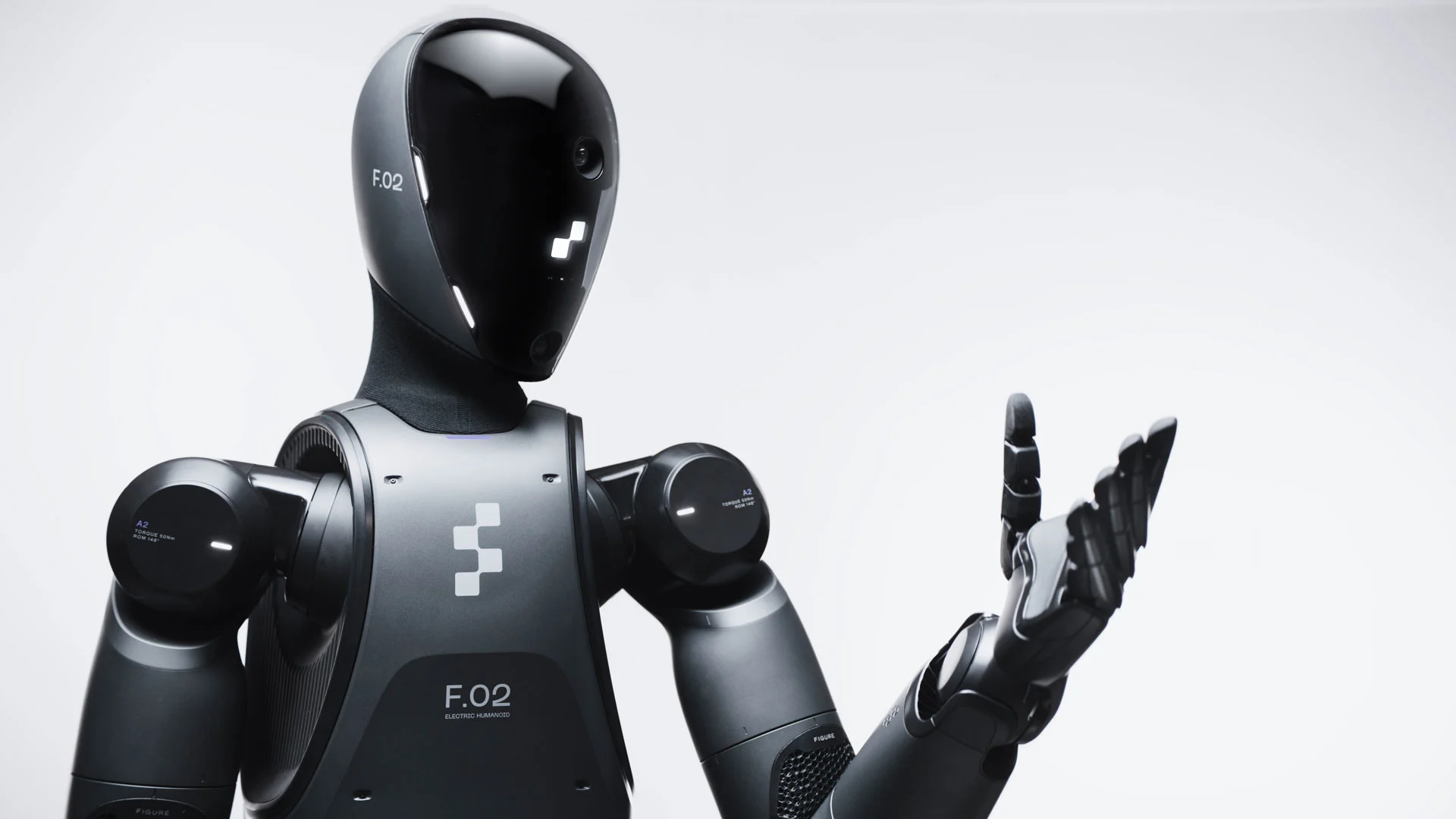
Robots have been on the horizon for decades. Now they are finally stepping into everyday life. They roll through warehouses, patrol malls at night, deliver food, and greet guests in hotels. On paper, adoption numbers are strong and rising. In reality, large parts of the public still feel uneasy about robots and about the AI that drives them.
At the same time, trust in digital content is being stressed by a flood of AI generated media. People are learning that images, reviews, and even “authentic” user generated videos can be synthetic. That erosion of trust does not stay online. It follows robots into physical space.
To understand how far we really are in the adoption curve, we need to look at both sides of the equation. The hard numbers that show what is being deployed and the social dynamics that decide what will actually be used and welcomed.
Where robotics adoption is already far along
In industrial and logistics settings, the future has already arrived.
According to the International Federation of Robotics, there are more than 4 million industrial robots in operation worldwide, and annual installations have been breaking records in recent years. Robot density in manufacturing has more than doubled in the last decade, with leading countries using several hundred robots per 10,000 workers on factory floors. In sectors such as automotive and electronics, robots are now part of the basic infrastructure.
Service robots are catching up quickly. Market analysts estimate that hundreds of thousands of professional service robots are already deployed, with year on year growth rates that often exceed 30 percent. These include:
-
Cleaning robots in airports, malls, and hospitals
-
Warehouse and delivery robots in retail and logistics
-
Security and inspection robots in large facilities
-
Hospitality robots that handle room deliveries and concierge tasks
From a business point of view, the logic is clear. Robots improve consistency, extend operating hours, collect rich operational data, and can reduce long term labor costs in highly repetitive roles.
If we judged adoption only by deployment numbers and growth curves, we might conclude that the market is already mature. Yet that would miss an important reality. Most of these robots operate behind the scenes. They are visible to managers and staff, but not deeply integrated into the emotional and social life of customers.
Consumer facing adoption looks very different.
Public facing robots and the trust gap
Whenever robots move into public and customer facing roles, adoption starts to depend on something less predictable than sensor accuracy or battery life. It depends on trust.
Surveys about AI in daily life show a clear pattern. In many countries, a majority of people say they are more concerned than excited about AI. Large majorities say they do not fully trust companies to use AI responsibly or to protect their data. These figures vary by country, but they point in the same direction. Comfort with AI is growing slowly. Concern is growing faster.
Put a robot into that context and the question becomes:
Do people see this system as helpful, safe, and accountable, or as an extension of an AI ecosystem they do not fully trust?
Research in human robot interaction offers several clues.
-
Previous exposure matters
People who have used robots in the past are more willing to let robots perform tasks and are less likely to intervene. Trust is built through repeated, uneventful encounters that feel competent and predictable. -
Context matters
Acceptance is much higher for tasks that feel mechanical or logistical such as cleaning floors or moving inventory. It drops when robots take on roles that involve judgment, safety, or emotional sensitivity, such as healthcare decisions or supervision of children. -
Perceived control matters
People are more comfortable when there is a clear human in the loop and a visible way to override or escalate. A robot that appears autonomous but unaccountable feels risky, even if it performs well.
In other words, the adoption curve is steep in invisible environments and much flatter in public, socially complex environments.
How AI generated content changed the baseline of trust
To understand the next phase of robotics adoption, we have to look at what has happened to trust in digital content in the last few years.
For more than a decade, user generated content was the gold standard for authenticity. Various surveys during the 2010s showed that 80 to 90 percent of consumers trusted UGC more than traditional advertising, especially for product reviews and lifestyle content. People believed that content from “someone like me” was more real than content from a brand.
Generative AI has started to break that assumption.
Recent research shows that large majorities of consumers now worry that online content is manipulated or synthetic. Many say they struggle to tell if images or videos are AI generated. A very high share of respondents in multiple surveys say authenticity in visuals is critical for trust and that they want labels on AI generated content.
Once people internalise the idea that anything on a screen can be fabricated, they change their mental default. They no longer start from trust. They start from doubt and work backwards.
This shift affects robots for two reasons.
-
Robots and holographic assistants are not just machines. They are delivery channels for information, recommendations, and media.
-
People increasingly ask “who is behind this” and “how was this made” for every interaction that feels mediated by technology, whether on a phone or in a shopping mall.
If you have learned that the “person” in your feed might be synthetic, it is not a stretch to suspect that the friendly robot in front of you might be optimised more for data capture or persuasion than for your interests.
The trust problem that began as an issue of AI content on screens is becoming a structural factor in how people approach AI in physical form.
Market adoption as a social contract, not only a spreadsheet
Classic technology adoption curves talk about innovators, early adopters, the early majority, and so on. That framing still applies to robotics, but it misses a key point.
Robots that operate in public and commercial spaces are not just tools that companies buy. They are part of an ongoing social contract between brands, institutions, and the people they serve.
Several social science insights are important here.
-
Legibility is a prerequisite for trust
People trust systems more when they can understand, at a basic level, what the system does and who is responsible. A robot that clearly belongs to a known store, airline, or venue and that has a visible path to human assistance is more likely to be accepted than an unbranded machine that feels abstract and ownerless. -
Benefits must be felt in the moment
Perceived benefit is a strong driver of long term trust. When robots clearly reduce waiting times, provide accurate information, or make a journey smoother, users gradually become more positive. If the benefits are invisible and the costs are felt in friction or confusion, resistance grows. -
Trust is relational, not universal
People might trust robots in one setting and reject them in another. For example, they may welcome a robotic guide in an airport, but resist a similar system in a school or hospital. Market adoption is therefore not a single global curve. It is a patchwork of local trust relationships.
From this perspective, asking “how far away are we” from widespread robotics adoption becomes less about years and more about conditions.
We are close in environments where robots are wrapped in strong human brands, where roles are clear, and where the value to users is obvious. We are further away where those conditions are missing.
Physical experiences, branded presence, and the new premium on authenticity
The erosion of trust in online content is quietly increasing the value of in person and in real life experiences. People still spend vast amounts of time online, but when it really matters, they look for signals that feel harder to fake.
These signals include:
-
Being in a real physical space such as a store, an airport, a stadium, or an attraction
-
Interacting with clearly branded environments and staff
-
Seeing information presented in ways that feel grounded in the location such as a holographic guide that references your actual surroundings
In this context, robots and holographic assistants can do something interesting. They can bridge the digital and the physical in a way that is visible and inspectable. You can walk around a holographic avatar. You can see where a service robot came from and where it goes. That physicality can act as an anchor of trust, if handled carefully.
For brands, this creates a strategic opportunity and a strategic risk.
-
If robots and holographic AI systems are designed as transparent, clearly accountable extensions of the brand, they can enhance the sense that the brand is real, present, and available in the moment.
-
If they are deployed as opaque automation that hides the real decision making, they may reinforce existing anxiety about AI and reduce trust further.
In competitive markets such as retail, travel, and out of home media, this difference will affect adoption more than hardware specifications.
Practical trust levers that accelerate adoption
If we treat trust as a design variable rather than a vague hope, several actionable levers become clear for any company deploying robotics in public spaces.
-
Brand the system clearly
Make it obvious who owns and operates each robot or holographic assistant. Use visual identity, signage, and on screen messaging. People should never feel that they are interacting with an anonymous machine. -
Explain the role in plain language
State what the system does and what it does not do. For example, “This holographic assistant can answer questions about store locations and opening times. It does not access your personal accounts or payment details.” -
Disclose when AI is involved
If content, recommendations, or answers are generated by AI, say so, and explain how data is used. This aligns with growing public expectations that AI usage should be visible and labelled. -
Offer an easy path to humans
Provide clear ways for people to escalate to human staff through a button, QR code, or nearby service point. Make that path part of the design, not a hidden fallback. -
Measure and optimise for user experience, not just efficiency
Track not only throughput and cost, but also satisfaction, confusion, and repeat usage. Use these signals to adjust behaviour, content, and interface. Over time, this forms a feedback loop that builds trust.
Companies that invest in these trust levers will see faster and deeper adoption, especially in environments where robots and holographic systems are part of the front line experience.
So how far away are we?
In the back rooms of industry and logistics, large scale robotics adoption is already here. In everyday public life, we are in a more fragile phase. The hardware is often ready. The social contract is still being negotiated.
The next five to ten years will not be determined only by breakthroughs in sensors, locomotion, or generative models. They will be shaped by whether people feel that robotic and AI powered systems in their environment are:
-
Clearly owned and accountable
-
Transparent about how they use data and automation
-
Genuinely useful in the moment
-
Embedded in spaces and experiences that feel authentically real
If these conditions are met, robots and holographic assistants will move from novelty to normal with surprising speed. They will become trusted interfaces that connect people to information, services, and brands in ways that feel both efficient and human centered.
If those conditions are ignored, adoption will stall at the edges. Robots will remain confined to back rooms and novelty roles, not because they lack capability, but because they lack trust.
Market adoption in robotics is therefore not a distant finish line. It is a moving frontier that advances every time a real person has a useful, transparent, and accountable interaction with a machine in the real world.