The Great Devaluation of Animation: What Happens When Months of Work Become Minutes?
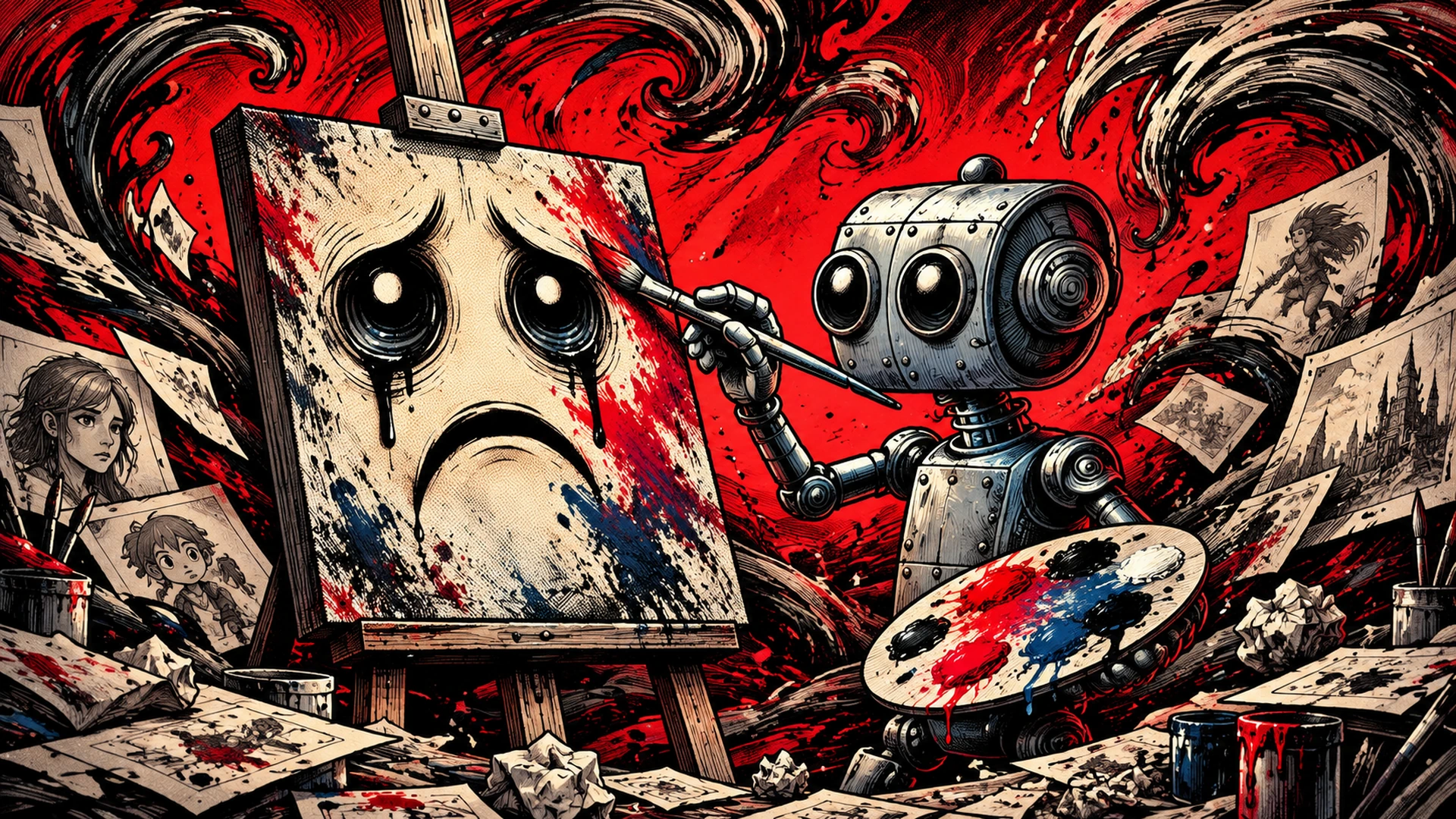
AI is not just making animation faster. It is changing what animation is worth.
For decades, one of the reasons animation was expensive was remarkably simple: it took a long time to make. A skilled animator was not simply charging for the few seconds that eventually appeared on screen. Behind those seconds could be hours, days or weeks of modelling, rigging, texturing, lighting, keyframing, rendering, compositing and revision. Multiply that across an advertising campaign, television programme, visual effects sequence or feature film and the amount of human labour involved could become enormous.
That labour created scarcity, and scarcity created value. Artificial intelligence is now beginning to dismantle that equation.
Today, an image can be generated from a sentence. That image can be animated. The camera can move around it. A character can speak, its voice can be replaced, its language can be changed, and entire backgrounds can be generated, removed or redesigned. Different versions of the same sequence can be created almost instantly. These capabilities are improving at extraordinary speed, and that changes the economics of animation in a way that previous generations of creative software never quite did.
Animation was expensive because time was expensive
It is easy to think that the cost of animation has always been primarily about talent. Talent is obviously an enormous part of it, but there was another factor that was just as important: time.
Imagine a brand commissioning a 20-second animation showing a futuristic city forming around one of its products. Traditionally, that might involve concept artists, storyboard artists, 3D modellers, texture artists, animators, lighting specialists, compositors and creative directors. Then come the revisions. The building should be taller. The lighting needs to be warmer. The camera should move in the opposite direction. The product should rotate more slowly. Could there be a different ending? Could another version be made for social media?
Every one of those changes represented more work, and more work represented more money. Generative AI fundamentally challenges that relationship. The instruction that once resulted in another day of production can increasingly become another prompt. That does not mean every generated result is good, and it certainly does not mean professional animators are suddenly unnecessary. Consistency, creative direction, judgement, storytelling and technical refinement still matter enormously. But the cost of producing the next version is collapsing.
Once production becomes significantly faster, the market inevitably begins to question why it should continue paying yesterday's prices for today's workload.
I have always loved technology that makes creative people better
This is not an argument against AI. Some of the greatest advances in creative technology have been tools that allow talented people to do things faster, better or in ways that were previously impossible.
One of the first pieces of software I personally remember feeling almost like artificial intelligence was Photoshop's Content-Aware Fill. The first time I saw it, it blew my mind. You could remove something from an image and Photoshop would analyse the area surrounding it and intelligently reconstruct what it thought should have been behind it. It felt like magic, and it was an incredible tool.
But I also remember thinking almost immediately that photo retouchers were going to lose work because of it. That did not make Content-Aware Fill a bad technology. A skilled retoucher could use it to work dramatically faster. Instead of spending hours cloning, masking and rebuilding part of an image manually, the software could perform much of the tedious groundwork almost instantly. The retoucher remained in control and could refine the result using their experience and judgement.
That is exactly how I think AI can be at its best. An animator using AI to improve rotoscoping, clean up footage, generate textures, interpolate frames, assist with motion capture or speed up repetitive production work is using technology as a tool. The animator is still animating. AI is simply making that animator faster and more capable.
There is, however, a very significant difference between that and typing a description into a box and asking the computer to create the animation for you. At that point, the technology is no longer simply accelerating the craft. It is beginning to perform the craft.
"Help me make this" versus "Make this"
Perhaps the simplest way to describe what has changed is to look at the instruction we are giving the software. For decades, creative software essentially responded to the idea of: help me make this. Photoshop helped photographers and designers manipulate images. After Effects helped motion designers create visual effects. Maya helped 3D artists model and animate objects and environments. Premiere helped editors assemble films. The tools became enormously sophisticated, but there was still a skilled operator sitting between the idea and the finished work.
Generative AI increasingly responds to something very different: make this. The change sounds subtle, but economically it is enormous. If a new piece of software allows an animator to produce in two days what previously took four days, that animator has become twice as productive. That is automation helping a skilled worker.
But if a system allows somebody who is not an animator to generate a usable animation in two minutes, something different has happened. The value of the underlying task has started to change.
From months to seconds
Animation has historically been one of the most labour-intensive forms of visual communication. Large animated films can take years to produce, while even relatively short commercial animations can require days or weeks of specialist work.
Generative AI compresses parts of that process to an extraordinary degree. That does not mean somebody can currently type a paragraph into an AI system and receive the equivalent of a polished Pixar film seconds later, but that comparison is not particularly useful because most commercial animation is not Pixar.
Most commercial animation is far more ordinary. It is the five-second product shot, the animated social advert, the moving background, the product visualisation, the transition, the presentation film, the explainer, the looping digital billboard or the 15-second piece of spectacle designed to make somebody stop scrolling.
It is precisely these kinds of relatively short pieces of visual content where the economic impact of AI could be enormous. Something that might previously have required several people and several days can increasingly be created by one person experimenting with a collection of AI tools. That does not necessarily make the output better, but it does make it dramatically cheaper to produce.
This is why creative work is being devalued
The word "devalued" can sound deliberately provocative, but economically that is what is happening to certain categories of content production. If something becomes substantially easier to produce, its scarcity falls. When scarcity falls, its market value often follows.
Imagine an animator who can produce a particular ten-second sequence in three days. Now imagine an AI system capable of producing something the client considers acceptable in ten minutes. The animator might quite reasonably argue that their version contains greater intention, more originality, better movement, stronger composition and considerably more craftsmanship. They may be completely correct.
The problem is that the customer now has a choice that did not previously exist. The customer is no longer comparing one animator with another animator. They are comparing professional craftsmanship with almost instant generation. For premium work, craftsmanship may still win. For everything else, price and speed become extremely powerful competitors.
The uncomfortable truth about creative pricing
Creative industries often talk about charging for value rather than time, but in reality time has always been embedded deeply within creative pricing. A project requiring three weeks of specialist work naturally costs more than something requiring an afternoon.
AI begins to disconnect those two things. A piece of visual content might still look as though it took three weeks to create, but perhaps it took three hours. Eventually clients notice, and once they do it becomes extremely difficult to charge for the labour that would once have been required to produce it.
Customers generally do not pay according to how difficult something used to be. They pay according to how difficult it is now. That is where AI becomes particularly disruptive. It is not simply making creative production more efficient. It is changing the customer's perception of what creative production should cost.
The people caught in the middle
For animators, visual effects artists, illustrators, retouchers and other creative professionals, there is something genuinely sad about this. People have spent decades learning highly specialised skills. They have learned how light behaves, how bodies move, how materials respond, how cameras work, how an audience interprets movement and how to make something feel heavy, soft, fast, luxurious, threatening or beautiful.
Many of these skills require years to master. Now machines can reproduce elements of the visible output without having gone through any of that process. That does not mean the machine possesses the same understanding as the artist, but commercially the distinction may not always matter. If the client only needs a ten-second piece of content that looks convincing enough on Instagram, they may not care whether it took ten years of experience to make or ten minutes of generation.
That is an uncomfortable reality for creative industries.
The disappearance of the junior
There may also be a much longer-term consequence. Great animators do not begin as great animators. They start as juniors, performing simpler production tasks, working alongside experienced people, making mistakes, observing and gradually improving. Over time, they become faster, better and more sophisticated. Eventually, some become senior animators, directors and creative leaders themselves.
But many of the simpler production tasks traditionally given to junior people are precisely the tasks AI is becoming particularly good at. That creates a strange problem. A studio may discover that it can use AI rather than hiring three junior artists, and in the short term that may make excellent financial sense. But where do the senior artists of 2040 come from if the junior roles of 2026 have disappeared?
Creative industries could unintentionally automate the first few rungs of their own career ladders.
That does not mean animators disappear
There is a temptation whenever new technology arrives to imagine two extremes: either nothing changes, or the entire profession disappears. Reality is usually more complicated.
Animation will not disappear, and animators will not disappear. But the role of the animator may change significantly. The animator who understands movement, composition, storytelling, character, cinematography and emotion may become enormously powerful when equipped with AI. One person may eventually be capable of producing the volume of work that previously required a small studio.
But that inevitably means the economics of the studio change. The same amount of content no longer requires the same number of people. This is why AI can simultaneously be an extraordinary creative tool and a profoundly disruptive economic force. Both things can be true.
The value may move away from execution
If executing an idea becomes incredibly cheap, then the idea itself becomes more important. That could be where creative value moves next.
Taste, storytelling, creative direction, originality, intellectual property, audience understanding and the ability to recognise what is interesting before everybody else recognises it may all become more valuable. AI can create virtually unlimited variations, but somebody still has to decide which variation is worth showing. Somebody has to understand what the audience should feel, what fits the brand and what is merely visually impressive but ultimately forgettable.
Knowing how to make something has always been valuable. In an AI-driven creative economy, knowing what should be made may become more valuable still.
For brands, this is an extraordinary opportunity
There is another side to this transformation. The collapse in production costs can be enormously beneficial for brands. Historically, producing content specifically for unusual digital formats could be expensive. A company might invest in a spectacular display technology and then discover that creating enough bespoke content to keep the experience fresh represented another significant expense.
AI begins to remove that barrier. For holographic displays in particular, this could be transformative. A brand using a Miirage holographic display could increasingly create multiple pieces of three-dimensional or cinematic content for the same campaign, adapt content for different locations, rapidly respond to events or trends and continually refresh what appears on the display.
Instead of producing one expensive animation and running it for six months, brands could potentially operate much more like publishers, with new content appearing regularly, different versions being used in different markets and campaigns reacting to cultural moments far more quickly.
The physical technology retains its value because the physical experience remains scarce. The digital content running through it becomes dramatically easier to create. That changes the economics of the entire proposition.
The democratisation of visual storytelling
There is something genuinely exciting about all of this too. Someone with a brilliant idea but very little money can increasingly visualise that idea. A small business can create advertising that once required a production company. An independent filmmaker can demonstrate a concept before raising finance. A designer can animate something without spending years learning traditional animation software.
That is extraordinary. AI is democratising visual communication. But democratisation and devaluation are often two sides of the same technological change. When something becomes easier to produce, more people can produce it. When more people can produce it, scarcity falls. And when scarcity falls, value moves somewhere else.
We may be entering the age of infinite content
We are rapidly approaching a world in which creating another image, another animation or another video costs almost nothing. That is historically unusual. For most of human civilisation, visual content was expensive. Painting was expensive. Photography was expensive. Film was expensive. Television was expensive. Animation was particularly expensive. Even digital content remained expensive because human beings still had to spend time making it.
AI removes much of that final constraint. We may therefore be entering an era of effectively infinite content, and in a world of infinite content the content itself cannot all remain valuable. Something else has to become scarce.
Attention is scarce. Ideas are scarce. Trust is scarce. Taste is scarce. Originality is scarce. Physical experiences are scarce. The ability to make somebody stop, look and feel something remains scarce. Those may become the things that matter most.
The great devaluation of animation
There is no reason to romanticise inefficiency. Nobody should spend three days manually performing a task that technology can intelligently complete in five minutes simply because that is how the industry used to work. Tools like Content-Aware Fill demonstrated exactly how wonderful intelligent automation can be. Give talented people better tools and they can do extraordinary things.
But generative AI represents something more significant. It is gradually changing the instruction from help me make this to make this, and once that happens the economics change with it.
The tragedy for many creative professionals is not that their skills suddenly became worthless. Their knowledge, judgement, taste and experience may become more important than ever. The problem is that much of the labour those skills once allowed them to charge for is becoming dramatically cheaper.
For more than a century, the creative industries operated within an economic system where great visual work was expensive partly because great visual work took time. AI is breaking that connection, and it is also changing what clients reward. In a market where acceptable content can be produced almost instantly, speed can increasingly matter more than the additional quality that once justified days or weeks of specialist work.
Time used to create value. Now speed does, and in a market flooded with instant content, "good enough now" is increasingly worth more than "great later".