A Generation Raised in a Digital World Is Turning Back to Physical Media
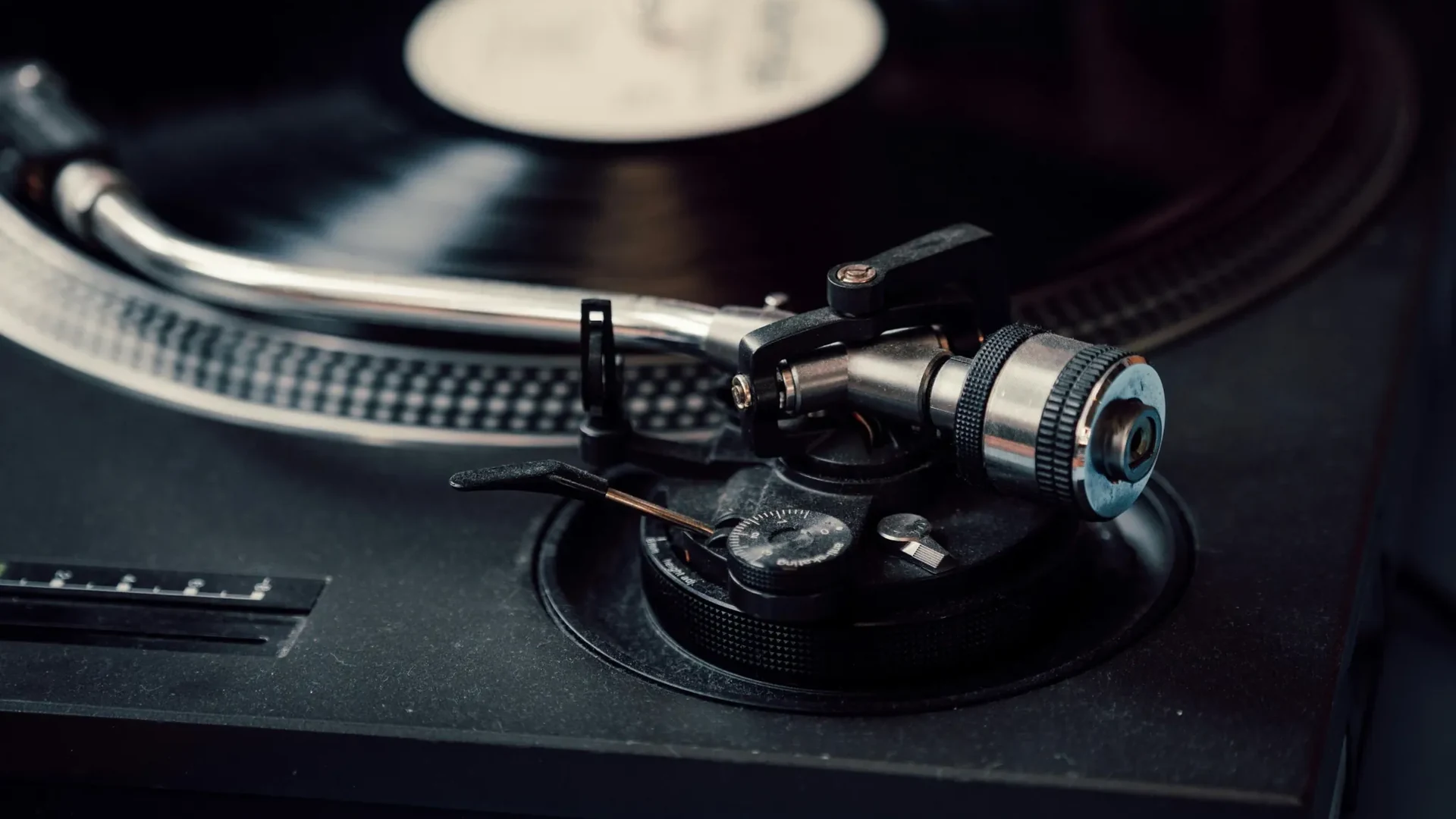
Vinyl, CDs, cameras and printed books are finding new audiences among people who grew up online. This may be less about nostalgia and more about what happens when digital convenience becomes overwhelming.
For more than two decades, the direction of travel seemed obvious. Music moved from CDs to downloads and then streaming, cameras disappeared into smartphones, DVDs gave way to streaming platforms, and photographs moved from albums into cloud storage. Almost every form of media became faster, smaller, cheaper and more convenient.
Now something more complicated is happening. The generation that grew up surrounded by digital technology is buying vinyl records, CDs are beginning to grow again, young people are carrying compact digital cameras that produce technically worse photographs than their phones, and printed books remain enormously popular. Film cameras, disposable cameras, Polaroids, DVDs and Blu-rays are also finding audiences that conventional wisdom suggested should have left them behind.
It is tempting to describe all of this as nostalgia, but nostalgia does not completely explain it. Many of the people buying these products are too young to remember when they were the dominant technology. What we may be seeing instead is the first major cultural response to digital abundance.
We spent 20 years removing friction
Technology has spent decades trying to make media effortless. Spotify gives us access to millions of songs without choosing which albums to own. Streaming platforms allow us to start a film without leaving the sofa. Smartphones can take thousands of photographs without the cost of developing a single one. Social platforms provide an effectively endless stream of videos without us even deciding what we want to watch next.
From a technical perspective, this is extraordinary. But convenience has a side effect. When everything is available instantly, individual experiences can begin to feel less deliberate. A vinyl record requires you to choose an album, take it from its sleeve, place it on a turntable and lower the needle. A CD asks you to select something physical and put it into a player. A film camera may give you only 24 or 36 photographs before the roll is finished. A physical book does not contain notifications, messages, recommendations or another tab waiting to be opened.
These limitations were once problems technology was trying to solve. For some people, they are becoming features.
The vinyl revival is no longer just a revival
The numbers around physical music are becoming difficult to dismiss. According to the BPI, UK physical music revenue grew 12.8% in 2025 to £278 million, marking a third consecutive year of growth. Vinyl revenue increased by 19.9% to £174.7 million, its highest level in more than three decades. Even CDs, which had spent years being written off as obsolete, returned to growth, with UK CD revenue increasing by 3.1% to £99.6 million. BPI data shows that physical music is no longer behaving like a format simply fading away.
Vinyl unit sales in the UK increased for an 18th consecutive year in 2025, reaching 7.6 million records. More importantly, many of the biggest-selling records were contemporary releases from artists with large younger audiences. Research commissioned by the Vinyl Alliance found that 50% of Gen Z vinyl fans said collecting vinyl provides a break from digital life, while 61% said replacing some digital habits with vinyl listening could benefit their mental wellbeing.
That matters because it suggests physical music is not simply being bought as decoration. Streaming is not disappearing. Gen Z can listen to Spotify during the day and play a record at night. The two behaviours are not contradictory. One provides extraordinary convenience. The other provides an experience.
CDs might be next
The CD is particularly interesting because it sits somewhere between analogue and digital. Unlike vinyl, a CD is digital technology, but the experience of owning one is physical. There is artwork, packaging, a defined track list and an object that belongs to you. There is no monthly subscription and no possibility that the album disappears because a licensing agreement changes.
The BPI's 2025 figures show that UK CD revenue has already returned to growth. That makes the wider trend harder to categorise simply as an analogue revival. Perhaps people are not rejecting digital technology at all. Perhaps they are rejecting the idea that everything digital has to be invisible, streamed and endlessly available.
The same thing is happening to photography
If physical music gives us the audio version of this trend, photography may give us the clearest visual equivalent. The smartphone has effectively perfected convenience in photography. Modern phones can automatically balance exposure, combine multiple images, sharpen details, remove noise, recognise faces and increasingly use artificial intelligence to alter photographs after they have been taken.
Yet compact digital cameras are returning. Young users are searching for small cameras from the 2000s and buying new compact cameras despite already carrying technically superior cameras in their pockets. Reporting by The Washington Post has highlighted younger users who prefer the separation a dedicated camera creates between taking photographs and using the internet.
Why carry a second device that is less capable than a smartphone? Because capability is not necessarily the point. A dedicated camera does one thing. You take a photograph and put it away. There is no incoming WhatsApp message, TikTok notification or email, and no immediate invitation to edit, upload, measure the reaction and start scrolling. The limitations create separation between capturing life and consuming the internet.
There is also an aesthetic element. Older compact cameras produce imperfections that smartphone manufacturers have spent billions trying to eliminate. Harsh flashes, grain, unusual colour, blown highlights and limited dynamic range are becoming desirable precisely because they do not look computationally perfect. The technically inferior photograph can feel more authentic.
Film takes that idea even further
Film photography exaggerates the same behaviour. Instead of taking 200 photographs and deciding afterwards which one matters, the photographer has a limited number of exposures. There is cost attached to pressing the shutter, and the image may not be visible for days or weeks. From the perspective of technological progress, almost everything about this is inconvenient.
That inconvenience changes behaviour. You look longer before taking the photograph. You take fewer images. You cannot immediately judge yourself or the people around you by looking at the screen. The moment continues after the shutter is pressed. Digital technology taught us that instant feedback was better, while a new generation is rediscovering that sometimes not knowing immediately can be part of the experience.
Even DVDs are finding a new audience
The same behaviour is beginning to appear in film and television. In February 2026, the Los Angeles Times reported growing interest in DVDs and Blu-rays among younger consumers, with video stores seeing younger customers attracted by ownership, access to films unavailable on streaming services and frustration with fragmented subscription platforms.
The appeal is understandable. Streaming gave consumers access to enormous libraries of films, but access is not ownership. Titles move between services. Films disappear. A movie available today may require a different subscription tomorrow. A DVD sitting on a shelf has an unusual advantage in 2026: it cannot be remotely removed from your collection.
Printed books never really went away
Books offer another useful clue. Recent research has found print remains highly popular with Gen Z, with digital detox and relief from screen-based life repeatedly cited as part of the appeal. A printed book has none of the technical capabilities of a tablet, and that is precisely its strength. It cannot notify you, recommend a video, switch applications, measure engagement or suddenly show you an advert.
For an hour, it is simply a book. In an environment where almost every digital product is competing to keep us engaged for longer, an object that does not compete for our attention can begin to feel surprisingly luxurious.
Digital fatigue is not the same as rejecting technology
This distinction is important. There is little evidence that an entire generation is preparing to abandon smartphones, streaming or social media. Quite the opposite. Deloitte's 2025 Digital Media Trends research shows younger consumers remain heavy users of social video and streaming platforms.
But this may actually help explain the physical-media movement. The more digital everyday life becomes, the more valuable moments outside that environment can feel. Deloitte estimates that media companies are competing for roughly six hours of entertainment time per person per day in the US. Within those six hours are streaming services, social media, gaming, music, podcasts and countless other products designed to capture attention. There is only so much attention available.
Digital fatigue does not necessarily mean people want technology to disappear. It may mean they want more control over when technology demands something from them. There is a significant difference between choosing to use technology and being continuously surrounded by technology designed to keep you using it.
Physical ownership creates emotional value
There is another element digital media struggles to reproduce: possession. An album collection tells a story. So does a bookshelf. A stack of old photographs can carry memories that feel different from scrolling through 30,000 images inside a cloud account. Physical objects accumulate history. They get scratched, sleeves fade, books acquire notes, photographs end up in frames, and a record bought at a particular concert can remain associated with that evening decades later.
Digital files are extraordinarily good at preserving information. Physical objects can be extraordinarily good at preserving meaning. That distinction may explain why physical media can survive even when a technically superior digital alternative exists.
Imperfection may become more valuable in the age of AI
Artificial intelligence is rapidly making digital creation easier, cleaner and more perfect. Images can be retouched instantly, voices can be corrected, video can be generated and content can be produced at extraordinary speed and enormous scale. As digital perfection becomes inexpensive, imperfection may become a signal of authenticity.
The crackle of a record, the grain of film, the faded colours of a compact camera photograph or the handwritten note inside a book all contain something increasingly difficult to manufacture digitally: evidence of a physical event. When perfect digital content is scarce, perfection is impressive. When perfect digital content becomes abundant, physical presence may become impressive instead.
What this means for brands and technology
This is where the trend becomes much bigger than music, books or photography. For years, businesses have assumed that digitisation means moving experiences onto smaller screens. Download the app. Scan the QR code. Visit the website. Watch the video. Open the digital menu. Use the touchscreen. Those things remain useful, but perhaps the next stage of technology is not about pushing even more of the physical world into phones.
Perhaps it is about bringing digital technology back into the physical world. Retail environments are already moving towards immersive installations, spatial computing, interactive displays and digital experiences that occupy real space. Holographic technology follows the same principle. The content may be digital, but the experience is physical. A life-sized person or product appears to occupy depth and space in front of an audience rather than existing as another piece of content inside a phone.
That is one of the ideas behind Miirage. The objective is not to ask people to spend even more time staring at another conventional screen. It is to use digital technology to create something that feels present in the environment around them. In that sense, a holographic display and a vinyl record may seem completely unrelated, but they respond to the same underlying human instinct: we like things that feel as though they are there.
The future may be digital, but it will not necessarily feel digital
The return of physical media should not be mistaken for society travelling backwards. Young people buying records are not campaigning to abolish Spotify. People carrying compact cameras are not going to throw away their smartphones. Readers choosing printed books have not forgotten that e-books exist. They are choosing between different experiences.
Digital won the battle for convenience a long time ago. Nothing physical is likely to beat streaming, cloud storage or smartphones on pure efficiency. But efficiency is not the only thing humans value. We also value ritual, texture, scarcity, ownership, presence, anticipation, imperfection and things that belong to us.
For twenty years, technology has asked how much of the physical world it could replace. The more interesting question for the next twenty may be the opposite.
How much of the digital world can we make feel physical again?