The Cloud Is Not Infinite: What Xbox’s New Limits Reveal About the Future of Computing
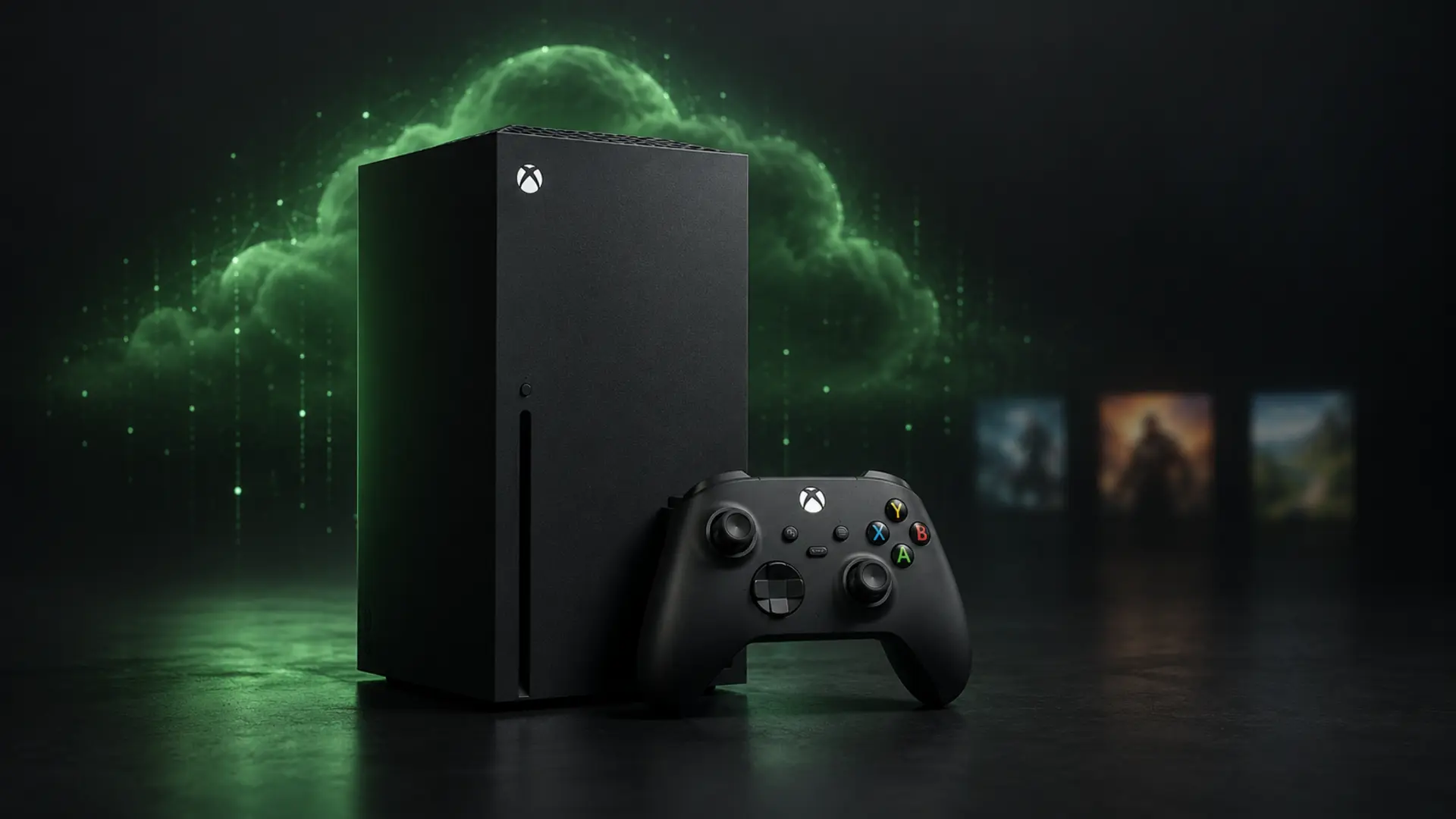
Xbox’s new cloud gaming limits reveal a much bigger truth: digital services still depend on physical infrastructure, finite energy and measurable costs.
Cloud computing can feel almost limitless. A film begins instantly, a game runs without a console and an artificial intelligence system can respond to a question in seconds. The machinery responsible for making it happen is usually hundreds or thousands of miles away, so the physical cost becomes easy to forget.
Xbox has just provided a timely reminder that the cloud is not an abstract, infinite resource. It is an enormous collection of computers, networks and data centres, and every minute of use has a measurable financial and environmental cost.
From November 2026, Microsoft will introduce monthly limits for Xbox Cloud Gaming. Game Pass Ultimate subscribers will receive 15 hours of cloud gaming each month, Premium subscribers will receive 10 hours and Essential subscribers will receive five. Once those hours are used, customers will be able to purchase additional cloud playtime.
According to the official Xbox announcement, the company expects the new restrictions to affect only 4% of Game Pass subscribers. Yet the reason given for the change has consequences far beyond gaming: the cost of delivering cloud gaming increases as more people use it and play for longer.
That single sentence reveals one of the defining challenges facing the future of computing.
The Computers Never Disappeared
The cloud changed where computing happens, but it did not remove the need for physical infrastructure.
When someone streams a game through Xbox Cloud Gaming, a remote machine is running that game on their behalf. It must process the graphics, receive the player’s inputs, encode the result and transmit a continuous video stream back with very little delay. Unlike downloading a file, the workload continues for every second that the person plays.
The same principle applies to many of the technologies now entering everyday life. Generative AI, real-time translation, virtual assistants, computer vision and interactive digital experiences all rely on processing that must happen somewhere. Even when the user owns no specialist equipment, servers, processors, cooling systems, network connections and electricity are still required behind the screen.
Xbox is not alone in placing a value on time. NVIDIA’s GeForce NOW gives Performance and Ultimate members 100 hours of premium cloud gaming per month, with additional hours available to purchase. Different limits and business models are being tested, but the underlying message is consistent: continuous access to high-performance remote computing cannot always be sold as an unlimited extra.
Demand Is Growing Faster Than Efficiency Can Contain It
Computing is becoming dramatically more efficient. The Stanford AI Index found that the cost of using an AI model performing at the level of GPT-3.5 fell from $20 per million tokens in November 2022 to $0.07 by October 2024. That represents a reduction of more than 280 times across the period measured.
It would be reasonable to assume that these efficiency gains should make the cloud cheaper and easier to provide. In practice, falling unit costs often encourage far greater use. More companies adopt AI, more products include it and individual systems are asked to complete increasingly complex tasks.
The latest figures show how quickly that demand is expanding. The International Energy Agency reported that global electricity demand from data centres rose by 17% in 2025, while consumption from AI-focused data centres increased by 50%. The agency expects total data-centre electricity consumption to rise from approximately 485 terawatt-hours in 2025 to around 950 terawatt-hours in 2030.
That projected 2030 figure is close to double today’s level and would represent approximately 3% of all global electricity demand. AI-focused data-centre electricity consumption is expected to triple over the same period.
This is not an argument against cloud computing or AI. Both can create enormous economic and social value. It is an argument for recognising that digital growth has a physical foundation. Efficiency matters, but efficiency alone cannot make rapidly expanding demand disappear.
The Cloud Is Also a Financial Problem
For businesses, electricity is only part of the equation. Cloud computing converts much of the cost of technology into ongoing consumption. This provides flexibility because an organisation can increase or reduce capacity without building its own data centre. It can also make the final bill difficult to predict.
The Flexera 2026 State of the Cloud Report found that 85% of respondents considered managing cloud costs their leading cloud challenge. Organisations estimated that 29% of their infrastructure-as-a-service and platform-as-a-service spending was wasted. Among large enterprises, 76% were spending more than $5 million per month on public cloud services.
These figures help explain why the future of computing is unlikely to involve putting absolutely everything in one distant cloud. Flexera found that 73% of organisations were already operating hybrid environments, combining public cloud services with private or local infrastructure.
The cloud remains essential. The more important question is which tasks genuinely benefit from being there.
Why Hybrid Computing Is Becoming the Practical Answer
A hybrid system places different workloads where they make the most sense.
Tasks requiring enormous shared computing resources, access to frequently updated information or coordination across many locations can be handled in the cloud. Tasks that must respond immediately, continue during a temporary connection problem or operate at a predictable cost can run locally, close to the user. This local processing is often described as edge computing.
The commercial momentum behind this approach is already visible. IDC forecasts that worldwide spending on edge computing will grow at 13.8% and reach nearly $380 billion by 2028.
The objective is not to choose between local computing and cloud computing. It is to use each intelligently.
For example, a customer-facing system might store and play its core visual content locally, preserving a fast and reliable experience. It could then use cloud services for conversational AI, central content updates, analytics and remote management. If connectivity is interrupted, a carefully designed local fallback can keep the essential experience running instead of presenting the customer with a blank screen.
This balance can also reduce unnecessary data transfers and make costs easier to forecast. Rather than sending every function to the cloud continuously, the system uses remote computing when it adds genuine value.
What Xbox’s Decision Means for Business Technology
For a gamer, reaching a monthly limit is frustrating. For a business operating a customer-facing service, an unexpected limit or cost increase can be much more serious.
Imagine an AI concierge in a shopping centre, a digital guide in an airport or an interactive product specialist in a retail environment. The experience may need to serve thousands of people, respond in several languages and remain available throughout opening hours. Its value depends not only on what it can do during a demonstration, but on whether it remains reliable and affordable after months or years of real-world use.
That means organisations must look beyond the initial price of an AI or digital experience and ask practical questions:
- Which functions run locally and which depend on the cloud?
- How is usage measured and what happens when demand exceeds the forecast?
- Are there additional charges for conversations, processing time or data transfer?
- What happens if the internet connection is temporarily unavailable?
- Can the system continue delivering a useful experience without every cloud service?
- How will costs change when the deployment grows from one location to one hundred?
These questions are becoming as important as screen resolution, processing speed or the quality of the AI model. A technology can be impressive and still be commercially unsuitable if its costs are unpredictable or its basic experience depends entirely on a permanent connection.
Holographic AI Makes Computing Visible Again
Holographic AI sits at an interesting point in this evolution because it gives digital intelligence a physical presence.
A holographic AI avatar can welcome a visitor, answer questions, explain a product, support wayfinding or deliver branded information inside a real location. The visual experience happens directly in front of the audience, but the intelligence behind it may draw on both local and remote computing.
For Miirage and the wider holographic technology industry, the lesson from Xbox is not that the cloud should be avoided. It is that cloud dependence must be designed deliberately.
Visual content and essential playback can operate locally. Cloud connectivity can support AI conversations, content distribution, remote monitoring and wider system management. Different deployments can then be structured around their expected audience, operating hours and level of interaction rather than assuming that every user will consume the same amount of computing.
This is particularly important as holographic displays move from temporary events into permanent retail, transport and public environments. At scale, a small difference in processing cost per interaction can become significant. Reliability also becomes part of the brand experience. The audience does not distinguish between a network failure, a software problem and a cloud limit. It simply sees whether the technology works.
The Next Phase of Computing Will Be Measured, Distributed and Physical
The cloud has transformed computing by making extraordinary capabilities available without requiring every user or business to own extraordinary hardware. That transformation will continue. What is changing is the assumption that remote computing can be treated as limitless.
Xbox’s new restrictions are a consumer-facing example of a much wider economic reality. Processing time, bandwidth, electricity and infrastructure all have a cost. As cloud gaming, artificial intelligence and real-time digital experiences expand, providers and customers will need more transparent ways to measure and pay for what they actually use.
The likely future is not a retreat from the cloud. It is a more mature computing model in which cloud infrastructure, local devices and edge processing work together. The cloud will provide scale and intelligence. Local systems will provide immediacy, continuity and control.
For businesses building the next generation of customer experiences, the question is no longer whether to use the cloud. It is how to use it without allowing an apparently invisible dependency to become a very visible failure.
The cloud may feel weightless, but every digital experience is supported by physical infrastructure. The future of computing will belong to systems that use that infrastructure intelligently.Further Reading
- Xbox Wire: Upcoming Changes to Xbox Cloud Gaming
- International Energy Agency: Key Questions on Energy and AI
- Flexera: What Five Years of State of the Cloud Data Reveals
- Stanford Institute for Human-Centered AI: The 2025 AI Index Report
- IDC: Global Edge Computing Spending Forecast to Reach Nearly $380 Billion by 2028